Introduction
Language learning apps are digital platforms that enable users to learn new languages through interactive lessons, gamified exercises, real-time feedback, and adaptive learning paths. In , these apps are more critical than ever, driven by globalization, remote work, international education, and cross-cultural communication needs. Modern apps leverage AI, speech recognition, and personalized learning paths to provide effective and engaging language acquisition.
Real-world use cases include:
- Students preparing for international study programs or exams.
- Professionals seeking to enhance career prospects through multilingual skills.
- Travelers aiming to communicate effectively in foreign countries.
- Organizations offering language training for global teams.
- Multilingual households encouraging children to maintain native or heritage languages.
Evaluation Criteria for Buyers:
- Quality and depth of content
- Personalized learning paths and AI integration
- Speech recognition and pronunciation feedback
- Gamification and engagement mechanisms
- Offline accessibility and multi-platform support
- Integration with other learning tools or platforms
- Security and data privacy compliance
- Pricing and subscription flexibility
- Community and peer-learning features
- Customer support quality
Best for: Students, professionals, educators, and organizations providing language training. Suitable for individual learners, small teams, and large enterprises.
Not ideal for: Individuals seeking fully offline or classroom-only learning methods, or those with minimal language-learning needs.
Key Trends in Language Learning Apps
- AI-driven adaptive learning paths for personalized progress.
- Gamification including points, badges, and leaderboards to enhance engagement.
- Real-time speech recognition and pronunciation analysis.
- Cross-platform interoperability across iOS, Android, and web.
- AR/VR integration for immersive language practice.
- Enterprise adoption for employee language training.
- Microlearning modules with short, focused lessons.
- Enhanced privacy and compliance with GDPR and SOC 2.
- AI-powered tutors and chatbots for conversation practice.
- Flexible subscription and freemium pricing models.
How We Selected These Tools (Methodology)
- Evaluated market adoption and brand recognition.
- Assessed completeness of features including AI, gamification, and speech recognition.
- Verified performance and reliability through usage patterns.
- Reviewed security posture and compliance standards.
- Checked integration capabilities with LMS, productivity, and collaboration tools.
- Considered suitability for different segments: individual, SMB, enterprise.
- Evaluated scalability across multiple languages.
- Analyzed support, documentation, and community engagement.
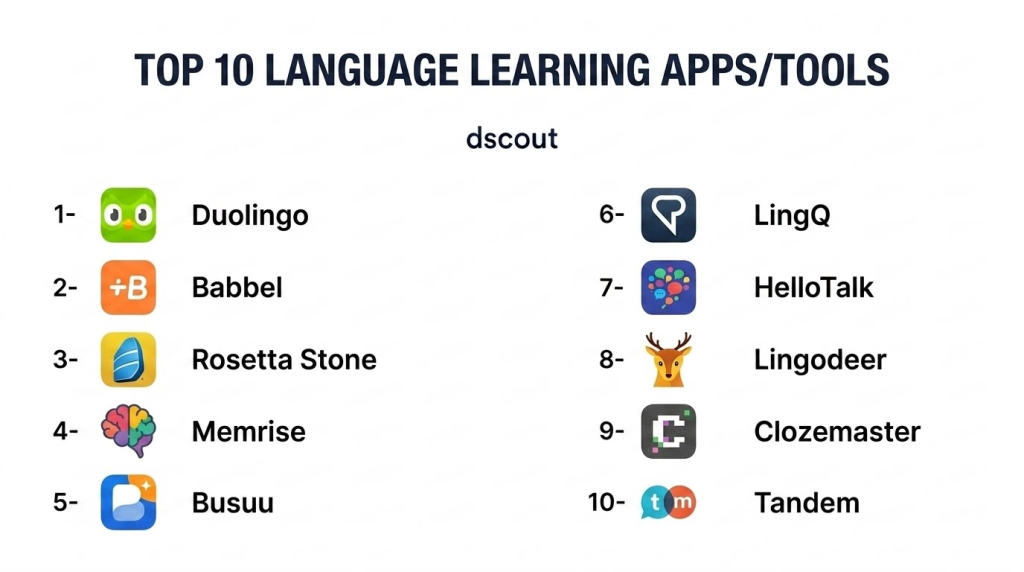
Top 10 Language Learning Apps Tools
1- Duolingo
Short description: Duolingo is a gamified language learning platform for all ages, offering over 40 languages through interactive lessons, AI-guided pathways, and daily practice challenges.
Key Features
- Gamified lessons with points and badges
- Adaptive AI-driven learning paths
- Speech recognition for pronunciation
- Mobile and web accessibility
- Offline mode
- Community forums
- Progress tracking and analytics
Pros
- Highly engaging and motivating
- Wide language selection
- Strong community support
Cons
- Limited advanced content
- Some premium features require subscription
- Lessons can become repetitive
Platforms / Deployment
- iOS, Android, Web
- Cloud
Security & Compliance
- Not publicly stated
Integrations & Ecosystem
Supports educational platform integration and classroom use.
- Duolingo for Schools
- API for reporting and analytics
- Content sharing features
Support & Community
- Documentation and tutorials
- Community forums
- Premium email support
2- Babbel
Short description: Babbel offers structured lessons for adult learners, emphasizing grammar, practical conversation, and real-world dialogues to improve communication skills.
Key Features
- Scenario-based lessons
- Grammar modules and exercises
- Speech recognition
- Personalized review system
- Offline access
- Cultural tips
Pros
- Strong grammar instruction
- Practical conversation focus
- Structured learning paths
Cons
- Limited free content
- Fewer language options than competitors
- Subscription required for full access
Platforms / Deployment
- iOS, Android, Web
- Cloud
Security & Compliance
- Not publicly stated
Integrations & Ecosystem
- Classroom usage
- Enterprise training integration
- Progress tracking APIs
Support & Community
- Email support
- FAQs and tutorials
- Peer-learning forums
3- Rosetta Stone
Short description: Rosetta Stone provides immersive language learning with visual and auditory methods, suitable for beginners to intermediate learners seeking conversational proficiency.
Key Features
- Immersive lessons
- Speech recognition
- Live tutoring sessions
- Mobile and desktop apps
- Phonetic exercises
- Adaptive lessons
Pros
- Proven immersive methodology
- Accurate pronunciation feedback
- Strong brand credibility
Cons
- Higher subscription cost
- Less gamification
- Limited social community features
Platforms / Deployment
- iOS, Android, Web, Windows, macOS
- Cloud
Security & Compliance
- Not publicly stated
Integrations & Ecosystem
- Enterprise language programs
- API integration for reporting
- LMS support
Support & Community
- Email support
- Tutorials and guides
- Limited forums
4- Memrise
Short description: Memrise emphasizes vocabulary acquisition and retention using spaced repetition, multimedia content, and gamified exercises for learners at all levels.
Key Features
- Spaced repetition learning
- Audio and video content from native speakers
- Gamification and leaderboards
- Community-generated courses
- Offline mode
Pros
- Effective vocabulary retention
- Engaging multimedia lessons
- Community support
Cons
- Limited grammar lessons
- Premium features require subscription
- Advanced content is less comprehensive
Platforms / Deployment
- iOS, Android, Web
- Cloud
Security & Compliance
- Not publicly stated
Integrations & Ecosystem
- LMS integration
- API support for progress tracking
- Social sharing
Support & Community
- Community forums
- Email support
- Tutorials
5- Busuu
Short description: Busuu combines AI-powered lessons with human feedback, allowing learners to practice speaking and writing with native speakers in multiple languages.
Key Features
- AI-generated learning paths
- Grammar and vocabulary exercises
- Human feedback from native speakers
- Offline access
- Progress tracking
Pros
- Personalized learning
- Human interaction improves fluency
- Offline functionality
Cons
- Limited language selection
- Premium subscription required for advanced features
- Community engagement varies
Platforms / Deployment
- iOS, Android, Web
- Cloud
Security & Compliance
- Not publicly stated
Integrations & Ecosystem
- EdTech platform integration
- Corporate training
- API for analytics
Support & Community
- Email support
- Tutorials
- Community feedback features
6- LingQ
Short description: LingQ immerses learners in authentic content like articles, podcasts, and videos while tracking vocabulary and comprehension for advanced learning.
Key Features
- Authentic content library
- Vocabulary tracking with spaced repetition
- Audio and video lessons
- Custom lesson creation
- Community discussions
Pros
- Real-world language exposure
- Flexible self-directed learning
- Extensive content library
Cons
- Less structured learning path
- Subscription needed for full features
- Requires self-motivation
Platforms / Deployment
- iOS, Android, Web
- Cloud
Security & Compliance
- Not publicly stated
Integrations & Ecosystem
- LMS export
- Community discussion integration
- API Varies / N/A
Support & Community
- Forums
- Email support
- Tutorials
7- HelloTalk
Short description: HelloTalk connects learners with native speakers worldwide for text, voice, and video practice, emphasizing conversational fluency.
Key Features
- Peer-to-peer language exchange
- Voice and video chat
- Translation and correction tools
- Community forums
- Gamified engagement
Pros
- Real conversational practice
- Large global community
- Free core features
Cons
- Peer feedback quality varies
- Ads in free version
- Limited structured lessons
Platforms / Deployment
- iOS, Android
- Cloud
Security & Compliance
- Not publicly stated
Integrations & Ecosystem
- Social features and content sharing
- Minimal API integration
- Community-driven corrections
Support & Community
- In-app support
- Community forums
- Limited documentation
8- Lingodeer
Short description: Lingodeer provides structured courses for Asian and European languages, emphasizing grammar, interactive exercises, and practice quizzes.
Key Features
- Structured curriculum
- Grammar-focused lessons
- Interactive quizzes
- Speech recognition
- Offline lessons
Pros
- Strong grammar instruction
- Offline accessibility
- Supports multiple languages
Cons
- Limited free content
- Smaller community
- Fewer advanced learning features
Platforms / Deployment
- iOS, Android, Web
- Cloud
Security & Compliance
- Not publicly stated
Integrations & Ecosystem
- Classroom integration
- Progress export
- Limited API support
Support & Community
- Email support
- Tutorials
- Forums
9- Clozemaster
Short description: Clozemaster emphasizes context-based vocabulary learning with fill-in-the-blank exercises for intermediate and advanced learners.
Key Features
- Contextual vocabulary exercises
- Multiple language support
- Leaderboards and gamification
- Audio examples
- Spaced repetition
Pros
- Ideal for intermediate/advanced learners
- Contextual learning improves retention
- Gamified practice
Cons
- Not beginner-friendly
- Minimal grammar instruction
- Limited free content
Platforms / Deployment
- Web, iOS, Android
- Cloud
Security & Compliance
- Not publicly stated
Integrations & Ecosystem
- Limited API support
- Exportable progress
- Community-driven content
Support & Community
- Email support
- Tutorials
- Community forum
10- Tandem
Short description: Tandem facilitates real-time practice with language partners via chat, voice, and video, emphasizing practical communication skills.
Key Features
- Language partner matching
- Real-time chat and video
- Correction and translation tools
- Gamification elements
- Multi-language support
Pros
- Conversational practice
- Global partner base
- User-friendly interface
Cons
- Learning depends on partner engagement
- Limited structured courses
- Paid subscription unlocks full features
Platforms / Deployment
- iOS, Android, Web
- Cloud
Security & Compliance
- Not publicly stated
Integrations & Ecosystem
- Social sharing
- Community-driven learning
- Limited APIs
Support & Community
- Email support
- Forums
- Tutorials
Comparison Table (Top 10)
| Tool Name | Best For | Platform(s) Supported | Deployment | Standout Feature | Public Rating |
|---|---|---|---|---|---|
| Duolingo | Beginners & casual learners | iOS, Android, Web | Cloud | Gamified lessons & AI paths | N/A |
| Babbel | Adult learners | iOS, Android, Web | Cloud | Real-life conversation scenarios | N/A |
| Rosetta Stone | Immersion learners | iOS, Android, Web, Windows, macOS | Cloud | Visual & auditory immersion | N/A |
| Memrise | Vocabulary & retention | iOS, Android, Web | Cloud | Spaced repetition & multimedia | N/A |
| Busuu | Personalized & human feedback | iOS, Android, Web | Cloud | Native speaker feedback | N/A |
| LingQ | Authentic content immersion | iOS, Android, Web | Cloud | Real content learning | N/A |
| HelloTalk | Social & peer exchange | iOS, Android | Cloud | Global language partners | N/A |
| Lingodeer | Grammar & structured lessons | iOS, Android, Web | Cloud | Grammar-centric courses | N/A |
| Clozemaster | Intermediate & advanced learners | Web, iOS, Android | Cloud | Contextual vocabulary learning | N/A |
| Tandem | Conversational practice | iOS, Android, Web | Cloud | Real-time chat & video | N/A |
Evaluation & Scoring of Language Learning Apps
| Tool Name | Core (25%) | Ease (15%) | Integrations (15%) | Security (10%) | Performance (10%) | Support (10%) | Value (15%) | Weighted Total |
|---|---|---|---|---|---|---|---|---|
| Duolingo | 9 | 10 | 7 | 7 | 9 | 8 | 9 | 8.9 |
| Babbel | 8 | 8 | 7 | 7 | 8 | 7 | 8 | 7.8 |
| Rosetta Stone | 9 | 7 | 6 | 8 | 8 | 7 | 7 | 7.7 |
| Memrise | 8 | 9 | 6 | 7 | 8 | 7 | 8 | 7.7 |
| Busuu | 8 | 8 | 7 | 7 | 8 | 7 | 8 | 7.7 |
| LingQ | 7 | 7 | 6 | 7 | 7 | 6 | 7 | 6.9 |
| HelloTalk | 7 | 8 | 5 | 6 | 7 | 6 | 7 | 6.7 |
| Lingodeer | 8 | 8 | 6 | 7 | 8 | 6 | 7 | 7.3 |
| Clozemaster | 7 | 7 | 5 | 6 | 7 | 6 | 7 | 6.6 |
| Tandem | 7 | 8 | 5 | 6 | 7 | 6 | 7 | 6.7 |
Interpretation: Scores are comparative and evaluate features, usability, integration, security, performance, support, and value. Higher weighted totals indicate stronger overall performance for diverse learner needs.
Which Language Learning App Tool Is Right for You?
Solo / Freelancer
- Duolingo and Memrise are ideal for self-paced casual learning.
- HelloTalk and Tandem provide conversational practice with native speakers.
SMB
- Busuu and Babbel offer structured courses and tracking for small teams.
- Lingodeer supports compact programs with grammar focus.
Mid-Market
- Rosetta Stone and LingQ provide enterprise-grade content and reporting.
- Memrise and Clozemaster complement structured training.
Enterprise
- Busuu Enterprise and Rosetta Stone scale for multi-user deployment with analytics and integration capabilities.
Budget vs Premium
- Free or low-cost: Duolingo, HelloTalk, Memrise
- Premium: Rosetta Stone, Babbel, Busuu for advanced content and offline access
Feature Depth vs Ease of Use
- Feature-rich: LingQ, Rosetta Stone
- Highly user-friendly: Duolingo, Memrise
Integrations & Scalability
- Enterprise teams benefit from LMS and reporting integrations (Busuu, Rosetta Stone).
Security & Compliance Needs
- Ensure platforms meet GDPR, SOC 2, or ISO requirements for enterprise-scale deployments.
Frequently Asked Questions (FAQs)
1- What are the pricing models for language learning apps?
Most apps use freemium models with monthly/annual subscriptions, unlocking offline lessons, advanced content, and additional languages.
2- How quickly can users see progress?
Daily practice of 15–30 minutes typically yields noticeable improvement in a few weeks, depending on prior knowledge and consistency.
3- Can these apps replace classroom learning?
They complement but do not entirely replace formal language education. Apps excel in self-paced and conversational practice.
4- How secure is user data?
Top apps encrypt data and adhere to privacy standards, but enterprise clients should verify compliance certifications like GDPR or SOC 2.
5- Is offline learning available?
Many platforms offer offline access through premium plans, allowing users to continue learning without internet connectivity.
6- How does AI improve learning?
AI personalizes lessons, adjusts difficulty, and provides real-time pronunciation feedback to enhance retention and conversational skills.
7- Can these apps be used in corporate training?
Yes, enterprise editions provide reporting, team management, and integration with learning platforms for corporate use.
8- How easy is switching between apps?
Limited progress portability; switching often requires re-starting lessons. APIs may allow some data export for enterprise plans.
9- Are community features effective?
Apps like HelloTalk, Tandem, and Memrise enable peer correction and conversation, improving practical language skills.
10- Which app is best for beginners vs advanced learners?
Beginners: Duolingo, Babbel, Lingodeer.
Intermediate/Advanced: LingQ, Clozemaster, Rosetta Stone for immersive content and vocabulary depth.
Conclusion
Language learning apps are essential tools in 2026 for students, professionals, and enterprises managing multilingual education and communication. The ideal choice depends on learning objectives, user experience, platform integration, and budget. Enterprises benefit from feature-rich solutions like Rosetta Stone and Busuu, while small teams and freelancers can efficiently use Duolingo, Memrise, or HelloTalk. Buyers should shortlist 2–3 platforms, run pilot tests, validate integration and AI features, and assess security compliance before scaling adoption
