Introduction
Secure Data Enclaves are specialized, isolated computing environments that allow organizations to store, process, and analyze sensitive data without exposing it to unauthorized users. In plain English, these tools create “virtual vaults” where confidential data, including personal, financial, and health information, can be securely accessed and analyzed under strict governance and compliance rules. As AI, analytics, and cloud computing continue to proliferate in , secure data enclaves are essential for mitigating data breach risks, ensuring privacy, and enabling secure collaboration.
Real-world use cases include:
- Secure analytics on healthcare patient records for research without violating HIPAA.
- Collaborative financial modeling between institutions without exposing raw PII or transaction data.
- Hosting sensitive government or defense datasets for AI/ML model training in an isolated environment.
- Academic research involving confidential survey or census datasets.
- Providing regulated data access for cloud-based AI and analytics while maintaining compliance.
Evaluation Criteria for Buyers often include:
- Level of isolation and access controls
- Compliance with GDPR, HIPAA, SOC 2, ISO 27001
- Integration with AI, analytics, and BI tools
- Scalability for large datasets and concurrent users
- Audit logging and governance features
- Encryption and key management capabilities
- Multi-cloud or hybrid deployment support
- Performance for large-scale analytics
- Policy-driven access and workflow management
- Cost and support infrastructure
Best for: Data governance teams, security officers, compliance teams, AI/ML engineers, and enterprises in highly regulated sectors such as healthcare, finance, and government.
Not ideal for: Small organizations handling only public or non-sensitive data, where complex enclave solutions may be unnecessary.
Key Trends in Secure Data Enclaves
- Increasing use of AI-assisted data anonymization and monitoring within enclaves.
- Multi-cloud and hybrid enclave deployments for flexible enterprise scalability.
- Real-time analytics on sensitive data without exposing raw datasets.
- Policy-driven access control and audit logging to meet regulatory requirements.
- Integration with MLOps pipelines and AI workflows.
- Subscription-based and usage-based pricing models for cost-efficient enterprise adoption.
- Enhanced encryption, key management, and data masking within the enclave.
- Dashboards for visibility, compliance reporting, and governance.
- Collaboration tools for secure data sharing with external partners.
- Automation of secure workflows to reduce manual compliance overhead.
How We Selected These Tools (Methodology)
- Evaluated market adoption and enterprise mindshare for sensitive data protection.
- Assessed feature completeness, including isolation, governance, and analytics support.
- Examined reliability and performance in large-scale enterprise deployments.
- Reviewed security posture, including encryption, SSO/MFA, and audit capabilities.
- Analyzed integration capabilities with AI pipelines, BI tools, and cloud platforms.
- Considered customer fit across SMB, mid-market, and enterprise segments.
- Evaluated scalability for large datasets, multi-cloud deployments, and concurrent users.
- Assessed support quality and community engagement for onboarding and troubleshooting.
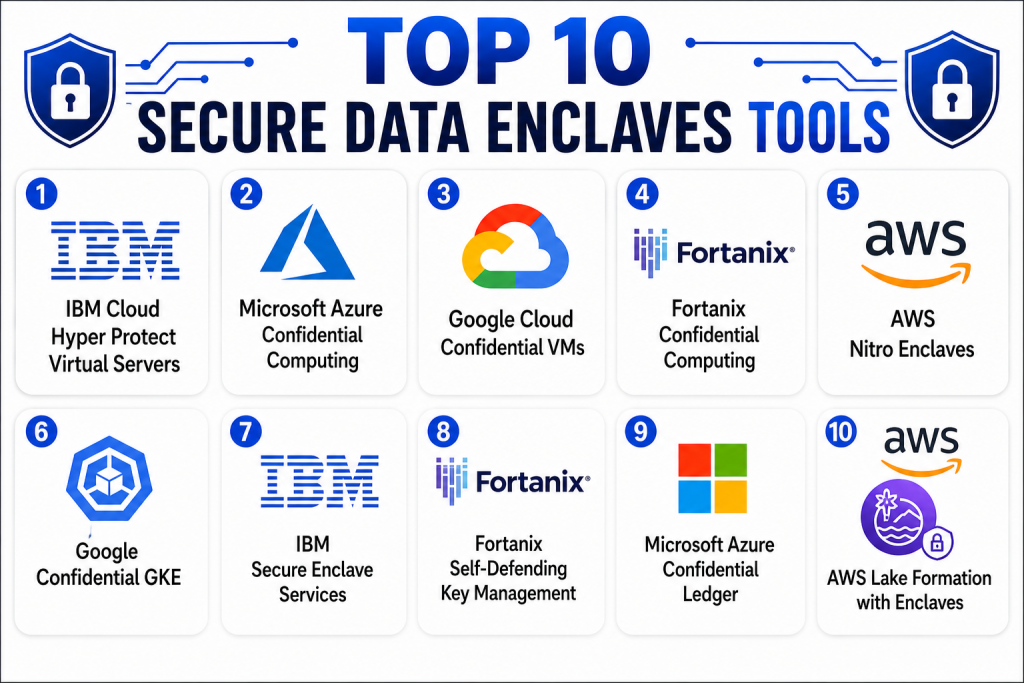
Top 10 Secure Data Enclaves Tools
1- IBM Cloud Hyper Protect Virtual Servers
Short description: IBM Hyper Protect Virtual Servers provide highly isolated compute environments with integrated encryption and secure key management, ideal for healthcare, finance, and regulated enterprises.
Key Features
- Hardware-enforced isolation
- Integrated encryption and key management
- Compliance with GDPR, HIPAA, SOC 2
- API access for secure workflows
- Multi-cloud and hybrid support
- Audit logging and monitoring
Pros
- Strong isolation for sensitive workloads
- Enterprise-ready compliance and security features
Cons
- Higher complexity for small deployments
- Licensing cost can be significant
Platforms / Deployment
- Web / Cloud / Hybrid
Security & Compliance
- SOC 2, ISO 27001, HIPAA, GDPR
- Encryption and SSO/MFA
Integrations & Ecosystem
- IBM Cloud services, Watson AI
- REST APIs and SDKs
- Integration with analytics pipelines
Support & Community
- Enterprise support and professional services
- Documentation and training resources
2- Microsoft Azure Confidential Computing
Short description: Azure Confidential Computing provides enclaves with hardware-based security for sensitive enterprise workloads, including AI, analytics, and financial processing.
Key Features
- Intel SGX-based secure enclaves
- Policy-driven access and workflow control
- End-to-end encryption
- Integration with Azure AI and analytics
- Audit logging and monitoring
- Multi-cloud support via hybrid deployments
Pros
- Seamless integration with Azure ecosystem
- Enterprise-grade data isolation
Cons
- Limited outside Azure environments
- Requires advanced configuration
Platforms / Deployment
- Web / Cloud / Hybrid
Security & Compliance
- SOC 2, ISO 27001, HIPAA, GDPR
- Encryption and RBAC
Integrations & Ecosystem
- Azure AI, Power BI
- REST APIs and SDKs
- Integration with MLOps pipelines
Support & Community
- Enterprise support
- Documentation and forums
3- Google Cloud Confidential VMs
Short description: Google Confidential VMs provide isolated compute instances with memory encryption, enabling secure analytics and AI workloads without exposing sensitive data.
Key Features
- Memory encryption using AMD SEV
- Isolated compute for sensitive data
- Integration with Google Cloud AI and analytics
- Audit logging and access controls
- Policy-based governance
Pros
- Cloud-native and scalable
- Integrated with Google Cloud services
Cons
- Limited multi-cloud flexibility
- Enterprise setup complexity
Platforms / Deployment
- Web / Cloud
Security & Compliance
- SOC 2, encryption, RBAC
- GDPR, HIPAA
Integrations & Ecosystem
- Google AI, BigQuery
- REST APIs and SDKs
- Integration with ML pipelines
Support & Community
- Enterprise support and documentation
- Professional services available
4- Fortanix Confidential Computing
Short description: Fortanix provides hardware-enforced secure enclaves for sensitive workloads, enabling AI and analytics in fully isolated environments.
Key Features
- Intel SGX enclave support
- Dynamic data protection and encryption
- Policy-driven access controls
- Audit logging and compliance reporting
- Multi-cloud and hybrid deployments
Pros
- Strong hardware-based security
- Supports multi-cloud enterprise use cases
Cons
- Setup complexity for smaller teams
- Requires professional onboarding
Platforms / Deployment
- Web / Cloud / Hybrid
Security & Compliance
- SOC 2, ISO 27001, encryption
- HIPAA, GDPR
Integrations & Ecosystem
- AWS, Azure, Google Cloud
- REST APIs and SDKs
- Integration with AI pipelines
Support & Community
- Professional support and training
- Documentation and knowledge base
5- AWS Nitro Enclaves
Short description: AWS Nitro Enclaves offer isolated, highly secure environments for sensitive data processing in the AWS cloud, suitable for finance, healthcare, and analytics workloads.
Key Features
- Hardware-based isolation
- Secure key management
- Integration with AWS AI and analytics services
- Policy enforcement and audit logging
- Multi-cloud access via hybrid designs
Pros
- Scalable for enterprise workloads
- Fully integrated with AWS ecosystem
Cons
- Limited outside AWS
- Requires technical expertise for management
Platforms / Deployment
- Web / Cloud
Security & Compliance
- SOC 2, encryption, RBAC
- HIPAA, PCI DSS
Integrations & Ecosystem
- AWS AI, S3, Redshift
- SDKs and REST APIs
- MLOps pipeline integration
Support & Community
- AWS support tiers
- Documentation and community forums
6- Google Confidential GKE
Short description: Confidential GKE provides Kubernetes clusters with encrypted memory, enabling secure AI workloads and analytics in Google Cloud.
Key Features
- Encrypted compute for Kubernetes workloads
- Policy-driven access control
- Integration with Google AI and BigQuery
- Audit logging and monitoring
- Multi-cloud hybrid support
Pros
- Scalable for containerized AI workloads
- Native Google Cloud integration
Cons
- Limited outside Google Cloud
- Enterprise configuration complexity
Platforms / Deployment
- Web / Cloud / Hybrid
Security & Compliance
- SOC 2, encryption
- GDPR, HIPAA
Integrations & Ecosystem
- Google AI, BigQuery, Anthos
- REST APIs and SDKs
- Kubernetes pipelines
Support & Community
- Enterprise support
- Documentation and training
7- IBM Secure Enclave Services
Short description: IBM Secure Enclave Services provide isolated compute and storage for highly regulated workloads in hybrid and cloud deployments.
Key Features
- Hardware-enforced isolation
- Key management and encryption
- Policy-driven access control
- Compliance dashboards and audit trails
- Integration with AI/analytics pipelines
Pros
- Enterprise-grade isolation
- Multi-cloud and hybrid support
Cons
- High complexity for deployment
- Licensing costs for smaller teams
Platforms / Deployment
- Web / Cloud / Hybrid
Security & Compliance
- SOC 2, ISO 27001, encryption
- HIPAA, GDPR
Integrations & Ecosystem
- AWS, Azure, Google Cloud
- REST APIs and SDKs
- AI and analytics pipeline integration
Support & Community
- Enterprise support
- Professional documentation
8- Fortanix Self-Defending Key Management
Short description: Fortanix Self-Defending Key Management secures cryptographic keys and data in enclaves, providing robust access control for AI and analytics workloads.
Key Features
- Hardware-enforced key storage
- Integration with AI pipelines and cloud apps
- Policy-based access controls
- Audit logging and compliance reporting
- Multi-cloud and hybrid deployment
Pros
- Strong encryption and key protection
- Supports multiple cloud environments
Cons
- Requires expertise for configuration
- Enterprise pricing
Platforms / Deployment
- Web / Cloud / Hybrid
Security & Compliance
- SOC 2, ISO 27001, encryption
- HIPAA, GDPR
Integrations & Ecosystem
- AWS, Azure, GCP
- REST APIs, SDKs
- MLOps integration
Support & Community
- Enterprise support
- Professional training and documentation
9- Microsoft Azure Confidential Ledger
Short description: Azure Confidential Ledger provides immutable, encrypted storage for highly sensitive workloads, enabling secure collaboration and AI analytics.
Key Features
- Encrypted and tamper-proof ledger
- Policy-based access control
- Integration with Azure AI and analytics services
- Audit logging and monitoring
- Multi-cloud and hybrid support
Pros
- Strong integrity and security features
- Seamless Azure ecosystem integration
Cons
- Limited outside Azure
- Enterprise licensing required
Platforms / Deployment
- Web / Cloud / Hybrid
Security & Compliance
- SOC 2, encryption
- HIPAA, GDPR
Integrations & Ecosystem
- Azure AI, Power BI, M365
- REST APIs and SDKs
- Hybrid cloud pipelines
Support & Community
- Enterprise support
- Documentation and training
10- AWS Lake Formation with Enclaves
Short description: AWS Lake Formation provides secure data lakes with enclave capabilities, enabling enterprises to process sensitive datasets safely for AI and analytics.
Key Features
- Secure, isolated data lakes
- Policy-driven access and encryption
- Integration with AWS analytics and AI
- Audit trails and compliance dashboards
- Multi-cloud hybrid support
Pros
- Scalable for large enterprise data lakes
- Integrated with AWS AI/analytics services
Cons
- AWS ecosystem-centric
- Technical setup complexity
Platforms / Deployment
- Web / Cloud
Security & Compliance
- SOC 2, encryption, RBAC
- HIPAA, GDPR
Integrations & Ecosystem
- AWS S3, Redshift, SageMaker
- REST APIs and SDKs
- MLOps pipelines
Support & Community
- AWS support tiers
- Documentation and professional services
Comparison Table (Top 10)
| Tool Name | Best For | Platform(s) Supported | Deployment | Standout Feature | Public Rating |
|---|---|---|---|---|---|
| IBM Cloud Hyper Protect | Regulated enterprise workloads | Web | Cloud / Hybrid | Hardware-enforced isolation | N/A |
| Microsoft Azure Confidential Computing | AI & analytics in Azure | Web | Cloud / Hybrid | Intel SGX enclaves | N/A |
| Google Cloud Confidential VMs | Cloud-native secure analytics | Web | Cloud | Memory encryption | N/A |
| Fortanix Confidential Computing | Multi-cloud enterprise AI | Web | Cloud / Hybrid | Hardware-enforced enclaves | N/A |
| AWS Nitro Enclaves | AWS cloud workloads | Web | Cloud | Isolated compute for sensitive data | N/A |
| Google Confidential GKE | Containerized AI workloads | Web | Cloud / Hybrid | Encrypted Kubernetes clusters | N/A |
| IBM Secure Enclave Services | Hybrid regulated workloads | Web | Cloud / Hybrid | Multi-cloud isolation | N/A |
| Fortanix Self-Defending KMS | Key management & enclaves | Web | Cloud / Hybrid | Hardware-enforced key protection | N/A |
| Microsoft Azure Confidential Ledger | Secure collaboration & AI | Web | Cloud / Hybrid | Immutable encrypted ledger | N/A |
| AWS Lake Formation with Enclaves | Large-scale data lakes | Web | Cloud | Enclave-enabled secure data lake | N/A |
Evaluation & Scoring of Secure Data Enclaves
| Tool Name | Core (25%) | Ease (15%) | Integrations (15%) | Security (10%) | Performance (10%) | Support (10%) | Value (15%) | Weighted Total |
|---|---|---|---|---|---|---|---|---|
| IBM Hyper Protect | 9 | 8 | 8 | 9 | 9 | 8 | 8 | 8.7 |
| Azure Confidential Computing | 9 | 8 | 8 | 9 | 9 | 8 | 8 | 8.7 |
| Google Confidential VMs | 8 | 8 | 7 | 8 | 8 | 7 | 7 | 7.7 |
| Fortanix Confidential Computing | 9 | 7 | 8 | 9 | 9 | 8 | 8 | 8.4 |
| AWS Nitro Enclaves | 9 | 7 | 8 | 8 | 9 | 8 | 8 | 8.3 |
| Google Confidential GKE | 8 | 7 | 8 | 8 | 8 | 7 | 7 | 7.6 |
| IBM Secure Enclave Services | 9 | 7 | 8 | 9 | 9 | 8 | 8 | 8.4 |
| Fortanix Self-Defending KMS | 9 | 7 | 8 | 9 | 9 | 8 | 8 | 8.4 |
| Azure Confidential Ledger | 8 | 7 | 8 | 8 | 8 | 7 | 7 | 7.7 |
| AWS Lake Formation Enclaves | 8 | 7 | 8 | 8 | 8 | 7 | 7 | 7.7 |
Interpretation: Weighted totals reflect relative strength in isolation, security, integrations, performance, support, and enterprise readiness. Higher scores indicate stronger suitability for multi-cloud, AI, and sensitive workloads.
Which Secure Data Enclave Tool Is Right for You?
Solo / Freelancer
Cloud-native services like Google Confidential VMs or AWS Nitro Enclaves are ideal for experimentation and small datasets.
SMB
Azure Confidential Computing or Fortanix Confidential Computing provide enterprise-grade isolation and compliance without extensive setup.
Mid-Market
IBM Hyper Protect and AWS Lake Formation with Enclaves offer scalable secure data processing for analytics and AI pipelines.
Enterprise
Fortanix Self-Defending KMS, IBM Secure Enclave Services, and Microsoft Azure Confidential Ledger deliver full-scale, multi-cloud secure environments with compliance reporting.
Budget vs Premium
Cloud-native services reduce upfront costs but may lack advanced dashboards. Enterprise platforms offer full compliance, audit, and workflow integration at higher cost.
Feature Depth vs Ease of Use
Enterprise tools provide deep isolation and governance controls; cloud-native services focus on simplicity and integration flexibility.
Integrations & Scalability
Enterprise solutions scale across clouds, AI pipelines, and multiple concurrent users. Cloud-native tools are best for single-cloud or limited workloads.
Security & Compliance Needs
Regulated industries should prioritize IBM Hyper Protect, Fortanix, or Azure Confidential Ledger. Teams with non-sensitive data can leverage cloud-native VMs or enclaves.
Frequently Asked Questions (FAQs)
1- What pricing models do these tools use?
Enterprise platforms are subscription or usage-based. Cloud-native services may be pay-as-you-go.
2- How long does onboarding take?
Cloud-native services can be integrated within days; enterprise-scale solutions may require weeks.
3- What are common mistakes using enclaves?
Improper policy configuration, neglecting audit logs, and ignoring encryption best practices.
4- Are these tools secure?
Yes, all enterprise solutions enforce hardware isolation, encryption, RBAC, and audit logging.
5- Can these tools handle multi-cloud deployments?
Yes, most enterprise platforms support hybrid and multi-cloud environments.
6- How do they integrate with AI pipelines?
REST APIs, SDKs, and direct cloud integrations allow secure AI workflow execution.
7- Is migration between tools difficult?
Depends on workflow complexity and APIs; cloud-native services are easier to swap than enterprise solutions.
8- Are there alternatives?
MLOps platforms provide limited isolation; dedicated enclaves are preferred for sensitive workloads.
9- How frequently should sensitive data be processed in enclaves?
Continuous processing is safe; regular audits (quarterly) ensure compliance.
10- Do these tools support compliance frameworks?
Yes, enterprise tools support SOC 2, ISO 27001, HIPAA, GDPR, PCI DSS, depending on platform.
Conclusion
Secure Data Enclaves are critical for protecting sensitive data, enabling secure AI/analytics workflows, and ensuring compliance in . Small teams may use cloud-native solutions like Google Confidential VMs or AWS Nitro Enclaves. Mid-market organizations benefit from Azure Confidential Computing or Fortanix, while enterprises should consider IBM Hyper Protect, Fortanix Self-Defending KMS, and Microsoft Azure Confidential Ledger for multi-cloud and regulatory-ready deployments. Recommended next steps include shortlisting , running pilot tests on key workflows, and validating integration with AI pipelines and governance protocols to maximize secure and compliant data operations.
