Introduction
Responsible AI Tooling refers to software platforms and frameworks designed to ensure that AI systems are ethical, transparent, and aligned with regulatory and organizational standards. In plain terms, these tools help businesses build, monitor, and audit AI models so they remain fair, explainable, and compliant with data privacy rules. In , with AI becoming more pervasive across industries, the stakes for accountability and trustworthiness have never been higher. Organizations are under scrutiny from regulators, consumers, and stakeholders to ensure AI decisions are interpretable and unbiased.
Real-world use cases include:
- Monitoring AI-driven recruitment tools to detect bias in candidate scoring.
- Ensuring fairness and explainability in loan approval and credit scoring models.
- Auditing recommendation engines to prevent discriminatory outputs.
- Tracking compliance for healthcare AI systems under HIPAA or GDPR.
- Validating automated decision systems in public sector or government services.
Evaluation Criteria for Buyers often include:
- Bias detection and fairness metrics
- Explainability and model interpretability
- Security and compliance support (SOC 2, ISO 27001, GDPR, HIPAA)
- Integration capabilities with existing ML pipelines
- Real-time monitoring and alerts
- Usability and dashboard reporting
- Scalability for enterprise-level AI deployments
- Model versioning and audit trails
- Transparency and documentation
- Cost and support ecosystem
Best for: AI teams, data scientists, ML engineers, and compliance officers in medium to large enterprises, financial services, healthcare, and regulated industries.
Not ideal for: Small businesses or startups running simple ML models where ethical oversight is less critical, or where generic cloud ML solutions suffice.
Key Trends in Responsible AI Tooling
- Integration of AI observability tools for real-time bias and fairness tracking.
- Automated documentation of model lineage and decision-making processes.
- Expansion of explainability methods supporting multi-modal models.
- Adoption of regulatory frameworks like EU AI Act influencing tool features.
- Cloud-native platforms offering hybrid and multi-cloud deployment flexibility.
- Built-in support for synthetic data generation to reduce bias.
- Enhanced role-based access control (RBAC) and audit logging for compliance.
- AI-assisted recommendations for model improvements and mitigation strategies.
- Platform pricing models shifting toward subscription-based and usage-based tiers.
- Ecosystem interoperability, enabling plug-ins for popular ML frameworks and MLOps pipelines.
How We Selected These Tools (Methodology)
- Evaluated market adoption and industry mindshare.
- Assessed feature completeness across fairness, explainability, and monitoring.
- Considered reliability and performance in production-grade AI pipelines.
- Reviewed security posture, including encryption, authentication, and compliance.
- Analyzed integrations and ecosystem compatibility with ML frameworks.
- Examined customer fit across enterprise, SMB, and developer-focused environments.
- Factored in scalability, support channels, and documentation quality.
- Prioritized 2026 relevance, including AI trends and regulatory readiness.
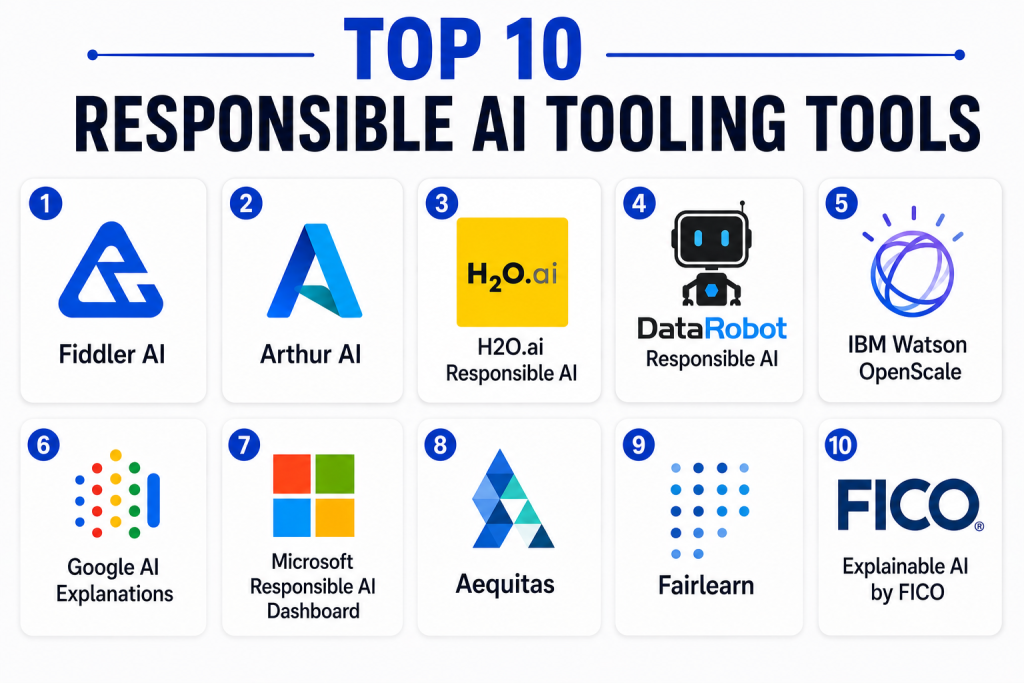
Top 10 Responsible AI Tooling Tools
1- Fiddler AI
Short description: Fiddler AI provides model monitoring, explainability, and bias detection for enterprise AI applications. It helps data science teams understand AI outputs and maintain compliance.
Key Features
- Model performance tracking and drift detection
- Bias and fairness dashboards
- Explainable AI with feature importance analysis
- Integration with cloud ML pipelines
- Real-time monitoring alerts
- Audit trails for regulatory compliance
Pros
- Strong focus on fairness and bias mitigation
- Enterprise-ready dashboards with actionable insights
Cons
- Primarily suited for large-scale deployments
- Customization requires technical expertise
Platforms / Deployment
- Web / Cloud / Hybrid
Security & Compliance
- SSO, MFA, encryption, audit logs
- SOC 2, ISO 27001, GDPR
Integrations & Ecosystem
Fiddler AI integrates seamlessly with common ML frameworks and data platforms.
- TensorFlow, PyTorch, scikit-learn
- Snowflake, Databricks
- REST APIs for custom pipelines
- Slack and email alerting
Support & Community
Extensive documentation, onboarding support, and active enterprise community.
2- Arthur AI
Short description: Arthur AI offers continuous AI monitoring and explainability, helping organizations ensure their models remain accurate, fair, and compliant.
Key Features
- Real-time model monitoring
- Bias and drift detection
- Explainability reports
- Regulatory compliance tools
- Multi-cloud support
- Automated alerts for anomalies
Pros
- Intuitive dashboards for diverse stakeholders
- Strong monitoring across complex pipelines
Cons
- Pricing may be high for small teams
- Requires initial integration effort
Platforms / Deployment
- Web / Cloud
Security & Compliance
- SSO, encryption, audit logs
- Not publicly stated for certifications
Integrations & Ecosystem
- TensorFlow, PyTorch, scikit-learn
- AWS, Azure, GCP
- API and webhook support
Support & Community
- Documentation, dedicated enterprise support, community forums
3- H2O.ai Responsible AI
Short description: H2O.ai provides model explainability, fairness, and monitoring capabilities, complementing its open-source machine learning platform for responsible deployments.
Key Features
- Explainable AI frameworks
- Fairness assessment
- Model drift detection
- Integration with H2O AI Cloud
- Visualization dashboards
- Automated reporting
Pros
- Strong open-source integration
- Active community support
Cons
- Enterprise features require paid plans
- Some advanced features need H2O expertise
Platforms / Deployment
- Web / Windows / Linux / Cloud
Security & Compliance
- Not publicly stated
Integrations & Ecosystem
- H2O.ai platform
- Python and R SDKs
- REST APIs
Support & Community
- Active open-source community, documentation, enterprise support options
4- DataRobot Responsible AI
Short description: DataRobot provides enterprise AI monitoring and explainability solutions, ensuring models remain fair, interpretable, and compliant across industries.
Key Features
- Model audit and transparency
- Bias detection
- Explainability and feature insights
- Continuous monitoring
- Regulatory compliance reports
- Multi-cloud deployment
Pros
- Enterprise-grade platform
- Comprehensive monitoring and reporting
Cons
- Steeper learning curve
- Costly for smaller organizations
Platforms / Deployment
- Web / Cloud / Hybrid
Security & Compliance
- SOC 2, ISO 27001
- Encryption, audit logs, RBAC
Integrations & Ecosystem
- Integration with Python, R
- MLOps pipelines (MLflow, Kubeflow)
- APIs for custom workflows
Support & Community
- Enterprise support tiers, extensive documentation
5- IBM Watson OpenScale
Short description: IBM Watson OpenScale provides transparency, explainability, and fairness monitoring for AI models, primarily in regulated enterprise environments.
Key Features
- AI fairness and bias detection
- Explainable predictions
- Continuous model monitoring
- Drift detection
- Compliance reporting
- Integration with IBM Cloud Pak for Data
Pros
- Strong in regulated industries
- Comprehensive auditing features
Cons
- Complexity may deter small teams
- Primarily IBM ecosystem-focused
Platforms / Deployment
- Web / Cloud / Hybrid
Security & Compliance
- SSO, encryption, audit logs
- SOC 2, ISO 27001, GDPR
Integrations & Ecosystem
- IBM Cloud Pak
- Python SDK
- REST APIs
Support & Community
- Enterprise support, professional services, active forums
6- Google AI Explanations
Short description: Google AI Explanations provides interpretability tools for TensorFlow models, allowing developers to explain predictions and detect potential biases.
Key Features
- Feature attribution for model predictions
- Integration with TensorFlow
- Bias detection metrics
- Explainability dashboards
- API access for programmatic usage
Pros
- Deep integration with TensorFlow ecosystem
- Suitable for developers familiar with Google Cloud
Cons
- Limited enterprise reporting
- Focused on Google stack
Platforms / Deployment
- Web / Cloud
Security & Compliance
- Google Cloud security standards
- Not publicly stated for certifications
Integrations & Ecosystem
- TensorFlow, TFX
- GCP AI services
- REST API access
Support & Community
- Google Cloud support, extensive documentation, developer community
7- Microsoft Responsible AI Dashboard
Short description: Provides monitoring, interpretability, and fairness tools for models deployed on Azure, focusing on enterprise compliance and AI accountability.
Key Features
- Model fairness and bias detection
- Explainability and interpretability
- Integration with Azure ML
- Monitoring and alerting
- Compliance reporting
Pros
- Enterprise-focused features
- Tight Azure integration
Cons
- Limited support outside Azure
- Learning curve for small teams
Platforms / Deployment
- Web / Cloud
Security & Compliance
- Azure security standards
- GDPR, SOC 2 for enterprise deployments
Integrations & Ecosystem
- Azure ML
- Python SDKs
- API and PowerBI integration
Support & Community
- Microsoft enterprise support, documentation, community forums
8- Aequitas
Short description: Open-source fairness audit toolkit for machine learning models, helping developers detect and mitigate bias in predictions.
Key Features
- Bias metrics across subgroups
- Fairness reporting
- Python-based API
- Integration with ML pipelines
- Visualization tools
Pros
- Free and open-source
- Flexible for developers
Cons
- Lacks enterprise-grade dashboards
- No built-in monitoring
Platforms / Deployment
- Python / Linux / Cloud (Varies)
Security & Compliance
- Not publicly stated
Integrations & Ecosystem
- Python ML frameworks
- Scikit-learn, TensorFlow, PyTorch
Support & Community
- Open-source community, GitHub documentation
9- Fairlearn
Short description: Open-source toolkit to assess and improve fairness in ML models, targeting developers and researchers aiming for ethical AI deployments.
Key Features
- Fairness assessment metrics
- Mitigation algorithms
- Python library integration
- Visualization for subgroup analysis
- Pipeline integration support
Pros
- Developer-friendly
- Active academic community
Cons
- Limited enterprise features
- No real-time monitoring
Platforms / Deployment
- Python / Cloud / Local
Security & Compliance
- Not publicly stated
Integrations & Ecosystem
- Python ML frameworks
- Scikit-learn, PyTorch, TensorFlow
Support & Community
- GitHub community, documentation
10- Explainable AI by FICO
Short description: Offers enterprise solutions for model transparency, interpretability, and compliance, mainly for financial services and risk management models.
Key Features
- Model explainability dashboards
- Fairness and bias detection
- Regulatory compliance reporting
- Integration with risk management systems
- Alerts for model drift
Pros
- Strong domain expertise in finance
- Enterprise-ready features
Cons
- Specialized focus may limit general ML use
- Pricing and onboarding complexity
Platforms / Deployment
- Web / Cloud / Hybrid
Security & Compliance
- SOC 2, encryption, audit logs
- GDPR
Integrations & Ecosystem
- Risk management software
- Python SDK, REST APIs
- Enterprise reporting systems
Support & Community
- Professional support, documentation, consulting services
Comparison Table (Top 10)
| Tool Name | Best For | Platform(s) Supported | Deployment | Standout Feature | Public Rating |
|---|---|---|---|---|---|
| Fiddler AI | Enterprise monitoring | Web | Cloud / Hybrid | Bias and fairness dashboards | N/A |
| Arthur AI | Monitoring + explainability | Web | Cloud | Real-time alerts | N/A |
| H2O.ai Responsible AI | Open-source integration | Web / Windows / Linux | Cloud | Model fairness + explainability | N/A |
| DataRobot Responsible AI | Enterprise ML pipelines | Web | Cloud / Hybrid | Continuous monitoring | N/A |
| IBM Watson OpenScale | Regulated industries | Web | Cloud / Hybrid | AI auditing | N/A |
| Google AI Explanations | TensorFlow models | Web | Cloud | Feature attribution | N/A |
| Microsoft Responsible AI Dashboard | Azure deployments | Web | Cloud | Azure ML integration | N/A |
| Aequitas | Developer audits | Python | Varies | Open-source bias metrics | N/A |
| Fairlearn | Developer/researcher | Python | Cloud / Local | Mitigation algorithms | N/A |
| Explainable AI by FICO | Finance risk models | Web | Cloud / Hybrid | Regulatory reporting | N/A |
Evaluation & Scoring of Responsible AI Tooling
| Tool Name | Core (25%) | Ease (15%) | Integrations (15%) | Security (10%) | Performance (10%) | Support (10%) | Value (15%) | Weighted Total |
|---|---|---|---|---|---|---|---|---|
| Fiddler AI | 9 | 8 | 8 | 9 | 9 | 8 | 8 | 8.7 |
| Arthur AI | 8 | 8 | 7 | 8 | 8 | 7 | 7 | 7.8 |
| H2O.ai Responsible AI | 8 | 7 | 8 | 7 | 8 | 7 | 8 | 7.8 |
| DataRobot Responsible AI | 9 | 8 | 8 | 8 | 9 | 8 | 7 | 8.4 |
| IBM Watson OpenScale | 9 | 7 | 7 | 9 | 8 | 7 | 7 | 8.0 |
| Google AI Explanations | 7 | 8 | 7 | 7 | 7 | 6 | 8 | 7.4 |
| Microsoft Responsible AI Dashboard | 8 | 7 | 8 | 8 | 8 | 7 | 7 | 7.8 |
| Aequitas | 7 | 7 | 6 | 6 | 7 | 6 | 9 | 6.9 |
| Fairlearn | 7 | 7 | 6 | 6 | 7 | 6 | 8 | 6.8 |
| Explainable AI by FICO | 8 | 7 | 7 | 9 | 8 | 7 | 6 | 7.6 |
Interpretation: Scores are comparative and reflect relative strengths in features, usability, integrations, security, performance, support, and value. Higher weighted totals indicate better overall suitability for enterprise-scale responsible AI deployment.
Which Responsible AI Tool Is Right for You?
Solo / Freelancer
Choose open-source tools like Aequitas or Fairlearn for experimentation and personal projects.
SMB
Platforms like Arthur AI or H2O.ai Responsible AI provide easy integration and monitoring without enterprise overhead.
Mid-Market
Fiddler AI and DataRobot Responsible AI balance features and enterprise capabilities suitable for growing teams.
Enterprise
IBM Watson OpenScale and Explainable AI by FICO offer full compliance, monitoring, and audit capabilities.
Budget vs Premium
Open-source tools are budget-friendly, whereas enterprise-grade platforms offer robust compliance and support at higher costs.
Feature Depth vs Ease of Use
Fiddler AI and DataRobot offer a strong mix of depth and usability, while open-source tools favor flexibility over out-of-the-box convenience.
Integrations & Scalability
Enterprise platforms scale across cloud and hybrid deployments; open-source tools excel in custom ML pipelines but require manual integration.
Security & Compliance Needs
Organizations with strict regulatory requirements benefit from IBM, FICO, or Microsoft dashboards; others can rely on lighter-weight open-source options.
Frequently Asked Questions (FAQs)
1- What pricing models do Responsible AI tools use?
Most offer subscription-based pricing; open-source tools are free, while enterprise-grade solutions typically have usage or user-based tiers.
2- How long does onboarding typically take?
Open-source tools can be implemented within days, whereas enterprise platforms may require weeks for integration, training, and compliance setup.
3- What common mistakes should organizations avoid?
Ignoring bias monitoring, skipping model explainability, and failing to integrate audit logs are frequent pitfalls.
4- Are these tools secure?
Enterprise solutions usually provide encryption, SSO, MFA, and compliance standards; open-source tools rely on secure deployment practices.
5- Can they scale for large organizations?
Yes, enterprise platforms like Fiddler AI, IBM Watson OpenScale, and DataRobot are designed for high-scale deployments.
6- How well do they integrate with existing ML pipelines?
Most enterprise tools integrate with TensorFlow, PyTorch, scikit-learn, and MLOps frameworks; open-source tools require custom integration.
7- Is switching between tools difficult?
Migration depends on model format and data pipelines; standardized APIs and documentation ease transitions.
8- Are there alternatives to dedicated Responsible AI tooling?
Yes, general-purpose MLOps platforms sometimes include basic monitoring and explainability features.
9- Do these tools support regulatory compliance?
Enterprise tools often provide GDPR, SOC 2, ISO 27001 compliance reporting; open-source tools need manual implementation.
10- How often should models be audited?
Continuous monitoring is recommended; periodic audits should occur at least quarterly for high-risk AI applications.
Conclusion
Responsible AI tooling is essential for organizations aiming to deploy AI ethically, safely, and compliantly. Selection depends on team size, budget, deployment scale, regulatory requirements, and desired depth of monitoring and explainability. Small teams may favor open-source solutions, while mid-market and enterprise organizations benefit from platforms with integrated compliance, dashboards, and automated alerts. A practical approach is to shortlist, run a pilot focusing on model transparency and bias detection, and validate integration with existing ML workflows. This ensures responsible AI practices are embedded without disrupting operational efficiency.
