Introduction
These everyday conveniences are not driven by simple computer programs. They are powered by a transformative technology that is reshaping our world. Welcome to the world of Machine Learning (ML), a core branch of Artificial Intelligence (AI) that allows computers to learn from experience without being explicitly programmed. Today, this technology powers everything from global supply chains to personalized medical treatments, making it one of the most critical fields of our time. Understanding this technology is no longer just for software engineers; it is essential knowledge for anyone looking to navigate the modern digital landscape. In this comprehensive guide, you will discover how algorithms learn, explore real-world applications, and understand the workflow behind building smart systems. If you want to stay ahead of these rapid technological shifts, exploring high-quality educational platforms is an excellent next step. You can access expert tutorials, industry updates, and step-by-step guides by visiting AIUniverse.xyz to kickstart your educational journey today.
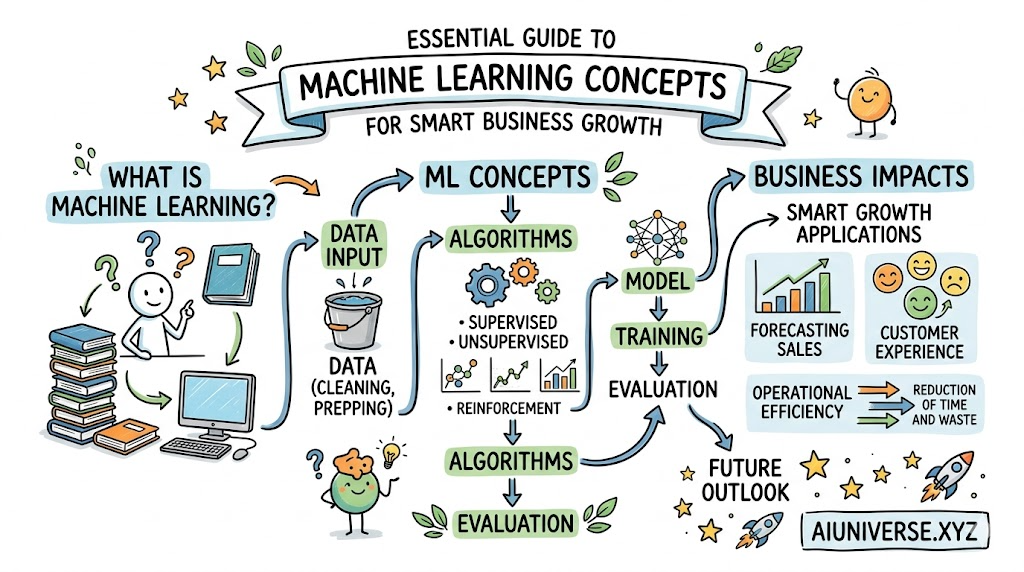
What is Machine Learning?
At its core, Machine Learning is a subset of Artificial Intelligence that focuses on building systems that learn from data. Instead of a human programmer writing specific rules for every possible scenario, a machine learning model analyzes massive amounts of information to discover hidden patterns.
Once the system identifies these patterns, it can make independent decisions, classifications, or predictions about new, unseen information. It mimics human learning by improving its accuracy over time through trial, error, and data adjustment.
The Evolution of Machine Learning
The concept of making machines intelligent dates back several decades, but early attempts relied heavily on rigid, human-written rules. These early systems failed when faced with unpredictable, real-world data.
The true breakthrough occurred when computer scientists shifted their focus from teaching machines rules to letting machines study data. With the arrival of the internet, cloud computing, and high-powered processors, computers suddenly had access to billions of data points and the power to process them.
This combination transformed the field from an academic theory into a practical tool that runs global industries. Today, it forms the backbone of modern automation, data science, and predictive analytics.
Difference Between AI and Machine Learning
People frequently use the terms Artificial Intelligence and Machine Learning interchangeably, but they represent different concepts. Artificial Intelligence is the broad, overarching umbrella that refers to any machine capable of mimicking human intelligence, problem-solving, and decision-making.
Machine Learning is a specific, specialized branch inside that large AI umbrella. Think of AI as the entire universe of smart technology, while Machine Learning is the specific engine that powers the most advanced parts of that universe.
While all Machine Learning is Artificial Intelligence, not all Artificial Intelligence qualifies as Machine Learning. For example, a basic calculator follows pre-set mathematical rules to solve complex formulas, making it an AI tool, but it cannot learn or improve on its own.
Why Businesses Use Machine Learning
Modern businesses generate massive amounts of data every day, ranging from customer clicks to inventory records. Humans cannot process this scale of information efficiently, which is where machine learning models become invaluable assets.
Companies use these systems to uncover hidden insights, streamline complex supply chains, and predict market trends. By automating data analysis, businesses significantly reduce operational costs, eliminate human error, and make accurate decisions in real time.
From small startups to global enterprises, utilizing smart algorithms is no longer an optional luxury; it is a necessity to remain competitive in a fast-moving market.
Core Concepts of Machine Learning
Data and Algorithms
The foundation of any machine learning system rests on two pillars: data and algorithms. Data is the raw information fed into the system, which can include text, numbers, images, audio recordings, or video files.
An algorithm is a set of mathematical rules, instructions, or step-by-step procedures that tells the computer how to process that information. The algorithm analyzes the data, looks for repetitions, and builds a mathematical framework based on what it discovers.
Without high-quality data, an algorithm cannot learn, and without a well-designed algorithm, data remains useless noise.
Model Training
Model training is the active learning phase where the algorithm studies the provided dataset to understand its underlying structure. During this process, the system makes a guess, checks how accurate that guess was against the correct answer, and adjusts its internal settings.
This cycle repeats thousands or millions of times until the system can reliably get the answer right. Think of it like a student practicing with flashcards before a major exam, constantly correcting mistakes until they memorize the concepts.
Once this training phase finishes successfully, the raw algorithm evolves into a functional, trained model ready for real-world tasks.
Predictions and Pattern Recognition
The ultimate goal of training a model is to enable accurate predictions and high-level pattern recognition. Once a model is fully trained, you can give it completely new data that it has never seen before.
The model applies its learned patterns to this new information to forecast future outcomes or classify items. For instance, online shopping websites suggest products based on previous customer purchases, using pattern recognition to guess what you might want to buy next.
Supervised Learning
Supervised learning is the most common type of machine learning, where the model trains on labeled data. Labeled data means that every piece of information given to the system already includes the correct answer or final tag.
Imagine an email platform automatically filtering spam messages using machine learning algorithms. The system trains on millions of emails that humans have already marked as “Spam” or “Not Spam,” learning the exact phrases that indicate a junk message.
Common real-world examples of supervised learning include predicting house prices based on size, or identifying objects in photographs.
Unsupervised Learning
In unsupervised learning, the model works with unlabeled data, meaning the computer receives no guidance, tags, or pre-determined answers. The algorithm must explore the input dataset on its own to find natural structures, similarities, and groupings.
For example, an e-commerce company might use unsupervised learning to group customers based on their buying habits without pre-defining what those groups should be. The algorithm might discover a distinct cluster of late-night shoppers who only buy electronics, allowing marketers to target them specifically.
This method is incredibly powerful for discovering hidden market trends, spotting anomalies, and organizing massive, disorganized databases.
Reinforcement Learning
Reinforcement learning operates on a system of trial, error, rewards, and penalties, closely mimicking how living creatures learn new skills. An autonomous system, known as an agent, interacts with an environment, takes an action, and receives feedback based on the outcome.
If the action brings the agent closer to its goal, it receives a positive reward; if the action causes a mistake, it receives a penalty. Over time, the system alters its strategy to maximize its total rewards.
This technique powers autonomous self-driving cars navigating complex traffic, automated robotics on factory assembly lines, and advanced software beating grandmasters at chess.
Types of Machine Learning Models
Classification Models
Classification models sort data points into distinct, pre-defined categories or groups based on their specific characteristics. This is a binary or multi-class process where the output is always a label rather than a continuous number.
For example, a medical model might look at a digital X-ray and classify it as either “Healthy” or “Diseased.” In daily life, banks use classification models to evaluate loan applications, sorting applicants into “Low Risk” or “High Risk” categories before approval.
Regression Models
Regression models predict a continuous, numerical value along a sliding scale rather than sorting data into separate categories. Instead of answering a yes-or-no question, regression answers questions like “How much?” or “How many?”
A classic example is predicting the future market value of a house by analyzing variables like square footage, neighborhood crime rates, and local school ratings. Businesses rely heavily on regression models to project monthly revenue, calculate optimal product pricing, and estimate customer wait times.
Clustering Models
Clustering models find natural groupings within a dataset where the items inside a single group are highly similar to each other but different from items in other groups. This is an unsupervised approach because the system does not use pre-existing labels or categories.
Streaming platforms use clustering models to group songs together based on tempo, instrumentation, and acoustic style, creating smooth, automated genre playlists. This helps companies organize massive inventories without requiring thousands of hours of manual labor.
Recommendation Systems
Recommendation systems analyze user preferences, past behavior, and community trends to suggest items that a specific user will find interesting. These systems typically use collaborative filtering, which compares your habits with millions of other users to find matches.
For example, Netflix uses machine learning to recommend movies based on user viewing behavior and ratings. If thousands of users who watch sci-fi movies also enjoy a specific mystery series, the system will automatically recommend that mystery series to you.
Neural Networks
Neural networks are advanced systems inspired by the organic structure of the human brain, featuring interconnected layers of artificial neurons. These networks form the foundation of Deep Learning, a specialized subfield of machine learning capable of processing highly complex data.
Each layer of the network analyzes a different abstraction of the input data, passing its findings down the line to the next layer. Neural networks power voice-activated virtual assistants, facial recognition security systems, and real-time language translation applications.
Key Components of a Machine Learning Workflow
Data Collection
The machine learning workflow always begins with data collection, which is the process of gathering raw information from various reliable sources. This data can come from user databases, sensor logs, online surveys, public archives, or web scraping tools.
The quality and variety of your collected data directly determine how effective your final model will be. If you collect narrow, incomplete, or biased data at this initial stage, your system will struggle to perform accurately in real-world scenarios.
Data Cleaning
Raw data is almost always messy, incomplete, inconsistent, and full of errors, requiring a thorough data cleaning process before use. During this step, engineers remove duplicate entries, fix typographical errors, handle missing values, and eliminate corrupted files.
For instance, if a dataset contains customer profiles with missing ages, engineers must decide whether to remove those profiles or fill them in with statistical averages. Clean data ensures that the algorithm does not waste time learning from irrelevant mistakes and confusing noise.
Feature Engineering
Feature engineering is the process of selecting, transforming, and combining raw data variables into highly informative inputs for the algorithm. Think of it as organizing information so that it highlights the most important factors for the machine.
If you are building a model to predict car prices, raw data might include the exact date the car was manufactured. Transforming that manufacture date into a clear feature like “Age of the Vehicle in Years” makes it much easier for the algorithm to calculate patterns.
Model Selection
Once the data is clean and organized, engineers enter the model selection phase to choose the best algorithm for the task. The ideal choice depends entirely on the problem you want to solve, the size of your dataset, and your computing power.
If you need a simple, easily explainable prediction, a basic linear regression model might be the perfect fit. However, if you are processing millions of high-resolution images, you will need a complex neural network to handle the structural depth.
Model Training
With the data prepared and the algorithm selected, the model training phase begins in earnest. The dataset is typically split into two parts: a large training set and a smaller testing set.
The algorithm spends the majority of its time studying the training set, adjusting its internal math to find accurate correlations. Engineers closely monitor this process, tweak configuration settings, and ensure the system is processing the data smoothly without running into errors.
Model Evaluation
After training concludes, the system enters the model evaluation phase to verify its actual accuracy and real-world readiness. Engineers expose the trained model to the testing dataset, which contains information the model has never seen before during its training cycles.
By checking how well the model predicts these hidden outcomes, developers get an honest view of its performance. If the evaluation scores are low, engineers must go back, adjust the settings, clean the data further, or try a different algorithm altogether.
Deployment and Monitoring
The final step of the workflow is deployment, where the verified model is integrated into a live production environment like a mobile app or a website. Once live, the model processes real user data and provides instant, automated predictions.
However, the job does not end there; continuous monitoring is required to ensure the model remains accurate over time. Real-world trends change, consumer behaviors shift, and models can degrade, requiring engineers to regularly retrain the system with fresh data.
Real-World Applications of Machine Learning
Machine Learning in Healthcare
Machine learning is revolutionizing the healthcare industry by assisting doctors, improving patient care, and accelerating medical research. Example: A healthcare system can predict potential diseases by analyzing patient records, lab results, and genetic histories.
Advanced image-recognition models analyze MRI scans and X-rays to spot early-stage tumors that might be too small for the human eye to detect. Furthermore, pharmaceutical companies use these algorithms to simulate chemical combinations, reducing the time required to discover life-saving medications.
Machine Learning in Banking and Finance
The banking and financial sectors rely on machine learning to secure transactions, manage risk, and automate daily customer service. Financial institutions use classification models to monitor millions of credit card transactions simultaneously in real time.
If a card is suddenly used to buy expensive jewelry in a different country minutes after buying groceries locally, the system flags it as fraud. Algorithms also analyze market fluctuations to manage investment portfolios, predict stock trends, and automate high-speed trading.
Machine Learning in E-Commerce
Online retail platforms use machine learning to personalize the entire shopping experience, boost sales, and optimize inventory levels. Beyond suggesting items you might like, these algorithms dynamically adjust product prices based on current market demand, competitor pricing, and stock levels.
Warehouse management systems use predictive analytics to forecast which products will be in high demand during upcoming holidays. This allows businesses to stock up on specific inventory ahead of time, ensuring they never run out of popular items.
Machine Learning in Social Media
Social media platforms use machine learning algorithms to curate custom user feeds, moderate content, and optimize advertising campaigns. Every time you scroll through your feed, the system tracks how long you pause on specific images, videos, or text posts.
It uses this behavioral data to serve you content that keeps you engaged for as long as possible. Additionally, automated content moderation systems scan billions of daily posts to identify and remove hate speech, graphic violence, and misinformation.
| Platform Context | Machine Learning Function | Real-World Benefit |
| Social Media | Behavioral tracking and content moderation | Highly engaging custom feeds and safer online communities |
| E-Commerce | Predictive analytics and dynamic pricing | Optimized inventory management and personalized sales |
| Banking | Real-time transaction monitoring | Instant fraud detection and secure digital asset protection |
Machine Learning in Cybersecurity
As cyber threats grow more sophisticated, cybersecurity systems use machine learning to defend networks, protect data, and stop digital attacks. Traditional security software only blocks known viruses, but smart algorithms look for anomalous behaviors across an entire network.
If a user account suddenly downloads thousands of restricted corporate files in the middle of the night, the system blocks access instantly. This proactive approach helps IT security teams stop zero-day exploits and ransomware attacks before they spread through a company.
Machine Learning in Smart Devices
Smartphones, home appliances, and wearable fitness trackers use miniature machine learning models to provide intuitive features. Voice assistants decipher spoken commands by converting acoustic audio waves into digital text instantly, learning your specific accent over time.
Smart thermostats study your daily routine, automatically lowering the temperature when you leave for work and warming the house before you return. Fitness trackers analyze heart rate variability and movement patterns to track sleep cycles, count steps, and detect medical emergencies.
Benefits of Machine Learning
Automation of Repetitive Tasks
One of the most immediate benefits of machine learning is the automation of tedious, repetitive, and time-consuming tasks. Businesses no longer need employees to spend thousands of hours manually entering data, sorting customer emails, or cross-checking invoices.
Smart software handles these tasks in seconds, freeing up human workers to focus on creative problem-solving and high-level strategy. This shifts human energy away from robotic routine tasks, drastically increasing overall corporate productivity.
Faster Decision-Making
In a fast-paced economic landscape, making quick decisions can make the difference between a business thriving or failing. Machine learning systems process terabytes of data and deliver actionable insights in fractions of a second.
For example, logistics companies use algorithms to recalculate delivery routes instantly when unexpected traffic jams or bad weather patterns develop. This rapid data processing allows enterprises to respond to real-world changes immediately, outperforming competitors who rely on slow manual reports.
Improved Customer Experience
By utilizing machine learning, companies can offer highly tailored, responsive, and round-the-clock support to their customer base. AI-powered chatbots handle routine inquiries instantly, resolving common issues without making customers wait in long phone queues.
Furthermore, personalized user interfaces ensure that consumers only see products, services, and articles that match their specific needs. This level of personalization makes buyers feel understood, leading to higher brand loyalty and improved satisfaction.
Predictive Analytics
Predictive analytics allows organizations to look into the future with a high degree of statistical accuracy. By studying historical data patterns, machine learning models can forecast future outcomes, consumer trends, and economic shifts.
Manufacturers use predictive analytics to estimate exactly when a factory machine part will break down based on vibration and temperature logs. This allows them to replace the part during scheduled downtime, avoiding costly, unexpected factory shutdowns.
Personalized Recommendations
Personalized recommendations make modern digital platforms incredibly addictive, useful, and commercially successful. Instead of serving every visitor the exact same homepage, sites adapt dynamically to individual tastes, histories, and moods.
This hyper-targeted customization benefits both consumers and business owners alike. Customers save time because they do not have to search through irrelevant products, while businesses experience higher conversion rates and sales volume.
Better Operational Efficiency
Integrating smart systems across an organization eliminates waste, optimizes resources, and improves overall operational efficiency. Energy companies use machine learning to balance electrical grids, routing power to areas experiencing high demand while conserving energy elsewhere.
Hospitals use predictive scheduling models to forecast patient intake numbers, ensuring they always have the correct number of doctors on duty. These structural optimizations reduce unnecessary spending, conserve resources, and streamline daily operations.
Common Challenges in Machine Learning
Poor Data Quality
The old computer science adage “garbage in, garbage out” perfectly describes the challenge of poor data quality in machine learning. If an algorithm trains on incomplete, outdated, incorrect, or corrupted information, the resulting model will make deeply flawed predictions.
Cleaning massive, chaotic datasets takes immense time, effort, and technical expertise, often consuming the majority of a data scientist’s schedule. Ensuring a steady stream of pristine, accurate data remains one of the largest hurdles for modern development teams.
Bias in Algorithms
Machine learning models learn directly from historical data, which means they can easily inherit, amplify, and perpetuate human biases. If a hiring tool trains on historical data from a company that previously favored a specific demographic, the model will reject qualified diverse applicants.
Fixing algorithmic bias requires development teams to audit their datasets carefully, ensure diverse data representation, and implement strict fairness metrics. Addressing this issue is critical to building ethical systems that treat everyone fairly and equitably.
Overfitting and Underfitting
Overfitting and underfitting are two fundamental technical problems that prevent machine learning models from making accurate real-world predictions.
- Overfitting occurs when a model memorizes the training data too perfectly, including all its random noise and flaws. As a result, it performs flawlessly on training tasks but fails completely when given new data.
- Underfitting happens when the model is too simple to grasp the underlying patterns in the data, leading to poor performance across the board.
Finding the perfect balance between these two extremes requires careful calibration, algorithm tweaking, and extensive testing.
Data Privacy Concerns
Training high-performing machine learning models requires massive amounts of user data, which naturally creates significant data privacy concerns. Consumers are increasingly wary of how corporations collect, store, and utilize their personal information, browsing histories, and biometric data.
Stringent global data privacy regulations require companies to protect user anonymity, secure digital files, and obtain explicit consent. Organizations must invest heavily in secure infrastructure to prevent devastating data breaches and avoid massive legal penalties.
High Computational Costs
Building, training, and running cutting-edge machine learning models requires incredible amounts of computing power and specialized hardware. Processing massive datasets through deep neural networks demands thousands of advanced processors running constantly for days or weeks.
This high computational requirement translates directly into expensive electricity bills, steep cloud computing fees, and hardware expenses. For many small startups and non-profit organizations, these high costs create a barrier to entry, limiting access to advanced technology.
Model Interpretability Challenges
Many advanced machine learning models, particularly deep neural networks, operate as “black boxes,” meaning their internal reasoning is impossible to see. A model might make an incredibly accurate prediction, but engineers cannot explain exactly why the system reached that specific conclusion.
In low-stakes scenarios like movie recommendations, this lack of transparency is harmless. However, in high-stakes fields like healthcare diagnostics or criminal justice, professionals must understand the reasoning behind a decision before acting on it.
Important Tools and Technologies in Machine Learning
Python and Popular Libraries
Python is the undisputed king of machine learning programming languages due to its simplicity, readability, and massive ecosystem of specialized tools. Beginners and industry experts favor Python because its straightforward syntax allows developers to write complex programs with minimal code.
The language features a rich library ecosystem, including NumPy for advanced math, Pandas for data organization, and Scikit-Learn for machine learning algorithms. These pre-written libraries save developers time, allowing them to implement powerful models without coding everything from scratch.
TensorFlow and PyTorch
When it comes to building deep learning models and complex neural networks, TensorFlow and PyTorch are the industry-standard software frameworks.
- TensorFlow, developed by Google, is a highly scalable platform favored by large enterprises for its stability and deployment tools.
- PyTorch, developed by Meta, is deeply popular among academic researchers and developers for its flexibility and user-friendly debugging environment.
Both frameworks provide the heavy-duty infrastructure needed to build modern artificial intelligence applications.
Data Visualization Tools
Data visualization tools are essential for understanding data patterns, evaluating model performance, and explaining technical findings to non-technical business leaders. Libraries like Matplotlib and Seaborn allow developers to transform millions of chaotic data rows into clear charts, graphs, and heatmaps.
For large businesses, interactive dashboard platforms like Tableau and PowerBI connect directly to machine learning models. These tools allow executives to monitor live performance trends, track metrics, and make data-driven decisions at a glance.
Cloud-Based ML Platforms
Cloud computing platforms have democratized machine learning by allowing anyone to rent high-powered computers, infrastructure, and tools over the internet. Services like Amazon Web Services (AWS) SageMaker, Google Cloud AI Platform, and Microsoft Azure ML provide end-to-end ecosystems for building models.
These cloud-based platforms handle data storage, model training, and application deployment without requiring companies to purchase expensive physical server hardware. This allows small teams to scale up their AI projects instantly without massive upfront infrastructure investments.
MLOps and Automation Tools
Machine Learning Operations (MLOps) is a set of practices focused on automating, scaling, and managing the lifecycle of production models. Tools like MLflow, Kubeflow, and Docker help engineering teams automate data pipelines, track model versions, and monitor live systems for errors.
Just as traditional software development requires automated pipelines to push updates, machine learning requires MLOps to handle data updates smoothly. Utilizing MLOps ensures that live models stay accurate, reliable, and secure over time without requiring constant manual supervision.
Machine Learning vs Traditional Programming
Rule-Based Systems
Traditional programming relies entirely on human-written, rule-based systems to solve problems and process incoming data. In this traditional setup, a human software engineer writes explicit instructions: if Input A happens, then execute Output B.
The computer follows these rigid instructions perfectly but cannot handle unexpected scenarios that the programmer forgot to include. This approach works well for predictable tasks like building a calculator or processing simple payrolls, but it fails in complex environments.
Learning from Data
Machine learning flips the traditional programming framework completely upside down to solve complex, unpredictable problems. Instead of inputting data and human-written rules to get an answer, you input data and past answers to discover the underlying rules.
The computer studies the examples, figures out the patterns on its own, and creates a flexible mathematical model. This allows machines to handle highly nuanced tasks like recognizing handwritten text or translating slang phrases, where writing explicit rules is impossible.
Scalability and Adaptability
Traditional software programs are rigid, meaning that if the real world changes, a human programmer must manually rewrite the source code. Machine learning models, by contrast, are inherently scalable and highly adaptable to changing circumstances.
If consumer purchasing habits shift next month, a machine learning model adapts simply by training on the new incoming data. This ability to self-correct without manual intervention makes smart systems incredibly resilient in fast-moving industries.
Automation and Decision Intelligence
While traditional software automates mechanical tasks, machine learning provides decision intelligence, allowing computers to make nuanced judgments. A traditional program can check if an online form has all its fields filled out correctly before submission.
A machine learning model can read the text inside that form, understand the emotional sentiment, and decide if it requires urgent customer attention. This shift from basic automation to actual decision intelligence is what makes modern AI a transformative technology.
Career Opportunities in Machine Learning
Skills Required for ML Professionals
Breaking into the fast-growing machine learning industry requires a balanced mix of mathematics, programming proficiency, and data engineering skills. Professionals must understand foundational linear algebra, calculus, and statistics to grasp how algorithms optimize data.
On the technical side, fluency in Python, data cleaning techniques, and experience with frameworks like PyTorch or Scikit-Learn are essential. Finally, professionals need strong communication skills to explain complex data findings clearly to corporate executives and business stakeholders.
Popular Machine Learning Job Roles
The explosion of artificial intelligence has created a wide variety of lucrative, rewarding career paths across almost every major industry.
- Machine Learning Engineers focus on writing software, deploying live models to production, and building scalable cloud infrastructure.
- Data Scientists spend their time exploring corporate datasets, finding hidden business trends, and building predictive models.
- Data Engineers build the underlying pipelines that collect, clean, and route raw information to the algorithms safely.
- AI Ethics Officers ensure that corporate algorithms operate fairly, legally, and without harmful bias.
Certifications and Learning Paths
Building a standout professional profile requires a mix of structured educational courses, recognized certifications, and hands-on portfolio projects. Beginners often start with online foundational courses covering basic data science, statistical analysis, and Python programming.
Earning specialized cloud certifications from major providers like AWS, Google Cloud, or Microsoft Azure proves your ability to handle corporate infrastructure. However, the most effective way to impress hiring managers is by building real projects, participating in coding competitions, and publishing clean code.
Learning Resources from AIUniverse.xyz
Navigating the massive world of artificial intelligence can feel overwhelming for beginners, making high-quality, structured guidance incredibly valuable. If you are looking for clear, reliable educational materials, exploring professional platforms is a great way to accelerate your progress.
You can find well-organized tutorials, comprehensive industry overviews, and deep technical insights by visiting AIUniverse.xyz to guide your ongoing study. Utilizing these resources helps you build a solid foundation, avoid common pitfalls, and master concepts efficiently.
Future of Machine Learning
AI-Powered Automation
The future of machine learning points toward full, end-to-end automation of complex business operations, industrial manufacturing, and scientific research. Instead of simply automating isolated tasks, smart systems will manage entire corporate ecosystems independently, optimizing workflows in real time.
We will see smart factories where machines detect their own wear, order replacement parts, and reschedule assembly lines without human intervention. This shift will allow human workers to move away from management tasks and focus purely on innovation, creativity, and long-term strategy.
Generative AI and Deep Learning
The convergence of deep learning and generative artificial intelligence is creating models that can generate original text, images, music, and software code. These technologies build upon basic machine learning concepts, using massive neural networks to understand the context of human prompts.
In the future, these generative tools will serve as collaborative assistants across creative and technical industries. Architects will use them to generate blueprints, writers will use them to brainstorm concepts, and software engineers will use them to debug code.
Intelligent Business Systems
Modern corporate software is evolving into intelligent business systems that act as proactive partners rather than static database tools. Future enterprise platforms will constantly monitor global market shifts, competitor activities, and internal resource levels simultaneously.
Instead of waiting for a manager to ask for a report, the system will automatically forecast upcoming challenges and suggest optimal strategic pivots. This level of built-in intelligence will transform how businesses plan budgets, launch products, and manage global supply chains.
Edge AI and Real-Time Analytics
As microchips become more powerful and energy-efficient, we are seeing a major shift toward Edge AI, which runs models directly on local devices. Instead of sending data across the internet to a distant cloud data center, devices process information locally on your phone or appliance.
This local processing enables instant, real-time analytics with zero internet lag, while significantly improving user data privacy. Edge AI will power the next generation of immediate-response technologies, including autonomous drones, smart medical implants, and instant language translators.
Ethical AI and Responsible Machine Learning
As machine learning models take over high-stakes decisions like bank loans, medical diagnoses, and legal reviews, ethical AI will become a primary focus. The industry will prioritize building explainable, transparent models, ensuring that algorithmic decisions can be audited and understood by humans.
Governments and international bodies will implement strict frameworks to prevent algorithmic bias, protect consumer privacy, and ensure data fairness. Developing responsible, ethical machine learning systems is essential to building public trust and ensuring that artificial intelligence benefits everyone equally.
FAQ Section
- What is the difference between supervised and unsupervised learning?
Supervised learning uses labeled datasets where the correct answers are provided, allowing the model to learn explicit correlations. Unsupervised learning analyzes completely unlabeled data, forcing the algorithm to find its own natural patterns, structures, and groupings without human guidance.
2. Do I need a strong math background to start learning machine learning?
You do not need a Ph.D. in mathematics to begin, but a basic understanding of linear algebra, calculus, probability, and statistics is highly beneficial. Modern software libraries handle the heavy math calculations for you, allowing you to focus on logic and system architecture.
3. Which programming language is best for machine learning beginners?
Python is widely considered the best language for beginners due to its clean, readable syntax and massive support community. It offers an incredible ecosystem of specialized pre-written libraries like Scikit-Learn, NumPy, and Pandas that make building models straightforward.
4. What is overfitting and why is it a problem?
Overfitting happens when an algorithm memorizes the training data too perfectly, including all its random flaws and noise. This prevents the model from generalizing well, causing it to perform poorly when exposed to new, real-world information.
5. How does Netflix use machine learning to suggest movies?
Netflix utilizes recommendation systems that analyze your viewing history, watch time, and ratings while comparing your habits to millions of other users. By identifying clusters of users with similar tastes, the system accurately predicts and suggests content you will enjoy.
6. How can I practice building machine learning models for free?
You can practice by using free open-source Python libraries and downloading public datasets from platforms like Kaggle. Cloud platforms also offer free tier accounts, allowing you to write code, train basic models, and build your professional portfolio without spending money.
Conclusion
Machine Learning has evolved from an academic concept into a foundational technology that runs our modern digital world. From sorting our daily emails to assisting doctors with complex medical diagnoses, its ability to find patterns in data is transforming every major industry.
As data continues to grow exponentially, understanding the core principles of data processing, algorithms, and model training will become increasingly valuable. Whether you are an aspiring developer, a business leader, or a curious tech enthusiast, mastering these basics opens up incredible professional opportunities.
