Source: ciodive.com
By now, the benefits of a cloud-based model are well documented, highlighting the potential for flexibility, agility and an augmented cost structure. More lamentation is overkill.
The next sign of industry maturity is not acceptance — it’s technique. Each cloud implementation requires a tailored approach, accounting for business needs and objectives. And that can vary from one department to the next.
While alluring to shift from a legacy architecture, cloud migrations require a clear tie to underlying business goals. Without them, it’s transformation for transformation’s sake, a method doomed from the outset, especially as CFOs question technology spending.
Guardian Life Insurance Company of America is undergoing a more than four year technology modernization roadmap to replatform products, reduce costs and shrink the time to develop new offerings. It requires moving off of mainframes, the reliable technology backbone of the financial services sector.
“Getting rid of the legacy is certainly a goal and a product of what we’re doing,” John Furlong, VP and head of business transformation, Guardian Life Insurance Company of America, told CIO Dive. The mainframe was in many ways a “limitation or inhibitor” and as a byproduct is becoming phased out.
Guardian Life has clear goals tied to its business transformation, Furlong said:
- Future-proof products and services and allow for more responsive time to market, including the quick introduction of new products.
- Understand how customers want to interact with Guardian, outside of legacy operating models and provided in an omnichannel setting.
- Channel expansion as more employers and brokers want to connect with Guardian using APIs and digital pathways.
- Introducing economies of scale, efficiency and effectiveness.
Guardian’s transformation is built on cloud-enabled microservices, modernizing from a largely mainframe-based technology stack in its middle and back office.
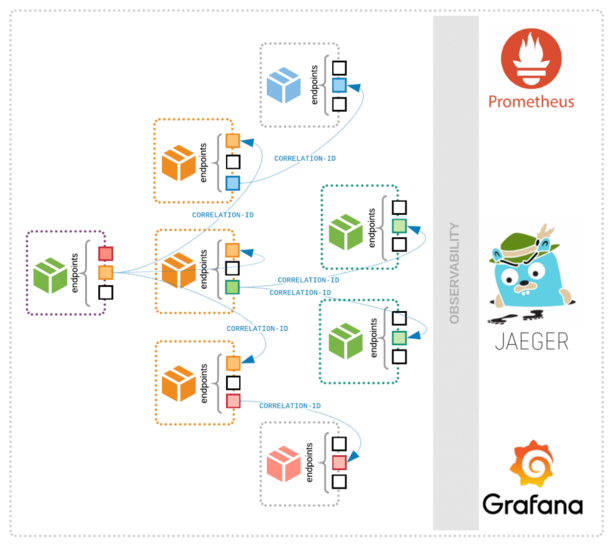
In microservices, an app is decomposed into services that are modular and independent, Arun Chandrasekaran, distinguished research vice president at Gartner, told CIO Dive. The technology stack takes on a more horizontal architecture, compared to the vertically-inclined monolithic applications.
Think of it as a Lego block, Chandrasekaran said. In microservices, there are numerous Lego pieces serving as independent building blocks. With that architecture, there is no single point of failure, because each is independent and modular.
One failure won’t break the system, he said.
Where microservices comes in
The fourth-largest mutual life insurance company in the U.S., Guardian’s business is split in two main parts:
- The group business, its fastest growing part, representing 40-45% of annual firm revenues, Furlong said.
- Individual markets, including life, disability and annuity
The bulk of the transformation is focused on the group business, which has an off-mainframe goal, running on unified cloud platforms built around a common architecture, according to Furlong.
The company works with solutions provider DXC Technology, which operates about 60% of Guardian’s application development and helps its innovation program and production support.
The end goal is accelerating time to market for products. If Guardian adds a product today, cycle time takes more than a year, Furlong said. Before a product can move forward, Guardian has to define product rules in about 10 groups systems.
In each case, Guardian has to define the same product in the technology or terminology the corresponding system knows, Furlong said. In microservices, one definition works across systems.
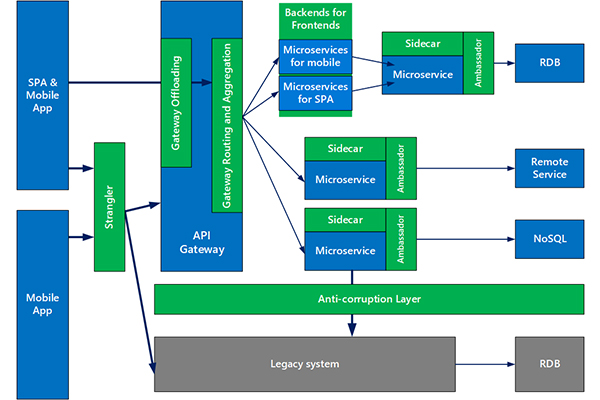
Adopting microservices separates front- and back-end components allowing companies to more rapidly scale workloads, said Chandrasekaran. It also improves availability and resiliency.
If there is a failure, it’s isolated and its impact does not trickle to other services. Technology industry leaders such as Netflix rely on microservices to quickly deliver offerings.
Companies do not have to migrate off legacy infrastructure to adopt microservces. But cloud-based systems offer the agility microservices require, including the tools and APIs that support it.