Introduction
Online Course Marketplaces are platforms that host and sell educational courses from various instructors, organizations, or institutions. These marketplaces provide learners with access to a wide range of topics and skills—from programming, design, and business to language learning, personal development, and professional certifications. For educators and content creators, these platforms offer tools to publish, market, and monetize courses without building a standalone learning environment.
In , Online Course Marketplaces have become central to digital learning. With increasing global demand for flexible, remote, and lifelong learning, these platforms help learners access high-quality content anytime, anywhere. For creators, marketplaces simplify distribution, payment processing, and learner engagement, making content creation more accessible and scalable.
Real-world use cases include:
- Skill development for professionals: Courses in programming, data science, leadership, and management.
- Academic supplementary learning: Students use online courses to supplement traditional education or prepare for exams.
- Lifelong learning: Individuals pursue hobbies, personal growth, or self-improvement topics.
- Corporate upskilling: Companies subscribe to marketplaces for employee training and certification.
- Freelancer and entrepreneur courses: Learning digital skills to enhance careers or business operations.
What buyers should evaluate:
- Range and quality of available courses
- Revenue sharing and pricing models for instructors
- Learner engagement tools (quizzes, projects, discussion boards)
- Analytics and reporting dashboards
- Accessibility and device compatibility
- Certification and credentialing support
- Marketing and promotional tools
- Ease of course creation and content upload
- Community and peer interaction features
- Security and payment processing capabilities
Best for: Instructors, institutions, corporate training teams, lifelong learners, and individuals seeking flexible, self-paced online education.
Not ideal for: Organizations requiring fully customized LMS systems, proprietary course branding, or highly regulated compliance environments.
Key Trends in Online Course Marketplaces
- AI-powered personalization: Tailoring learning pathways based on skill level, performance, and preferences.
- Microlearning and bite-sized modules: Delivering content in short, digestible units.
- Gamification and learner engagement: Badges, leaderboards, and interactive projects to increase retention.
- Cross-platform accessibility: Web, mobile, and tablet access for seamless learning.
- Integrated assessments and certifications: Credentials that can be shared or verified digitally.
- Subscription-based and bundled models: Flexible pricing for learners and revenue optimization for creators.
- Community and peer learning: Discussion forums, mentorship, and collaborative projects.
- Global reach and multilingual content: Catering to international learners and diverse markets.
- Video-first and interactive content: High-quality video, AR/VR simulations, and interactive quizzes.
- Analytics-driven insights for creators and institutions: Understanding learner behavior and optimizing course content.
How We Selected These Tools (Methodology)
- Market adoption and mindshare among global learners and instructors.
- Breadth of course offerings and quality of learning content.
- Platform reliability, performance, and uptime.
- Security posture, including payment processing and user data protection.
- Integration with tools like LMS, analytics dashboards, and content management.
- Ease of use for both learners and instructors.
- Support resources, community engagement, and training.
- Innovation in AI, interactive learning, and engagement features.
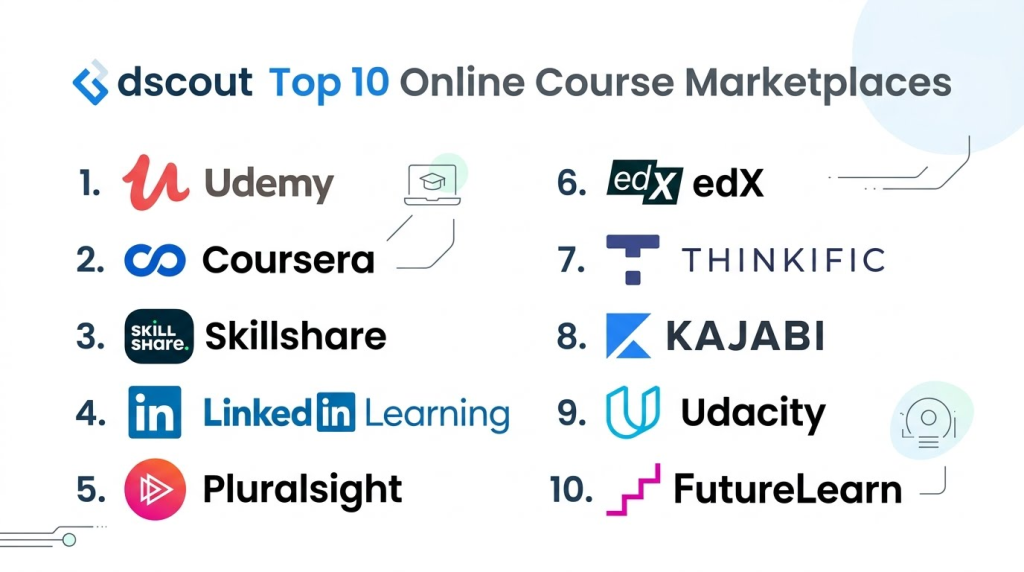
Top 10 Online Course Marketplaces
1- Udemy
Short description: Udemy is a global online learning platform offering over 200,000 courses in a variety of subjects. It caters to learners seeking skills development and instructors looking to monetize content.
Key Features
- Wide variety of subjects including tech, business, and personal development
- Self-paced video courses with quizzes and exercises
- Mobile app access
- Revenue-sharing for instructors
- Analytics dashboards for instructors
- Certificate of completion for learners
Pros
- Massive content library
- Flexible course creation tools
Cons
- Revenue share reduces instructor earnings
- Course quality varies across offerings
Platforms / Deployment
- Web / iOS / Android / Cloud
Security & Compliance
Not publicly stated
Integrations & Ecosystem
- LMS integration through APIs
- Payment gateways
- Marketing and promotional tools
- Affiliate programs
Support & Community
Comprehensive documentation, instructor support, and community forums
2- Coursera
Short description: Coursera partners with universities and organizations to provide accredited courses, certifications, and degrees online. It focuses on professional and academic learning.
Key Features
- University-validated courses
- Professional certificates and degree programs
- Mobile and offline learning support
- Peer assessments and quizzes
- Multi-language content
Pros
- Credibility from university partnerships
- Wide range of academic and professional subjects
Cons
- Limited control for independent instructors
- Premium content requires subscription
Platforms / Deployment
- Web / iOS / Android / Cloud
Security & Compliance
Not publicly stated
Integrations & Ecosystem
- LMS compatibility
- Integration with Google Workspace
- Enterprise learning subscriptions
Support & Community
24/7 support, help articles, and active learner forums
3- Skillshare
Short description: Skillshare is a subscription-based platform emphasizing creative and practical skills, including design, coding, and entrepreneurship.
Key Features
- Subscription-based access to thousands of courses
- Project-based learning with community feedback
- Mobile apps and offline viewing
- Instructor-led workshops and tutorials
- Community discussions and peer learning
Pros
- Focused on creative and applied skills
- Engaging project-driven approach
Cons
- Less academic rigor
- Subscription model limits individual course purchases
Platforms / Deployment
- Web / iOS / Android / Cloud
Security & Compliance
Not publicly stated
Integrations & Ecosystem
- Community project sharing
- LMS and enterprise integration
- Peer feedback systems
Support & Community
Documentation, online tutorials, and active user community
4- LinkedIn Learning
Short description: LinkedIn Learning offers professional development courses focused on business, technology, and creative skills, leveraging LinkedIn data to personalize recommendations.
Key Features
- Curated professional courses
- Skill assessments and recommendations
- Integration with LinkedIn profiles and resumes
- Certificates shareable on LinkedIn
- Offline mobile learning
Pros
- Personalized learning pathways
- Professional networking integration
Cons
- Subscription required
- Less hands-on coding projects
Platforms / Deployment
- Web / iOS / Android / Cloud
Security & Compliance
Not publicly stated
Integrations & Ecosystem
- LinkedIn integration
- Enterprise LMS compatibility
- HR and skill tracking tools
Support & Community
Online documentation, training guides, and support portals
5- Pluralsight
Short description: Pluralsight provides technology-focused courses, offering in-depth tutorials, skill assessments, and certifications in software development, IT, and engineering.
Key Features
- Technology skill paths and assessments
- Hands-on coding exercises
- Offline mobile access
- Interactive labs for practical learning
- Enterprise skill analytics
Pros
- Strong tech and software curriculum
- Interactive labs enhance skill acquisition
Cons
- Subscription-based pricing
- Limited coverage for non-technical subjects
Platforms / Deployment
- Web / iOS / Android / Cloud
Security & Compliance
Not publicly stated
Integrations & Ecosystem
- LMS integration
- HR skill-tracking
- API for learning analytics
Support & Community
Dedicated support and tech community forums
6- edX
Short description: edX offers university-level courses, professional certificates, and micro-degrees across STEM, business, and humanities subjects, partnering with leading institutions worldwide.
Key Features
- Accredited online courses and MicroMasters programs
- Self-paced and instructor-led learning
- Peer interaction and discussion boards
- Certificates and verifiable credentials
- Enterprise learning subscriptions
Pros
- University credibility
- Wide range of academic and professional courses
Cons
- Paid certification for some programs
- Less focus on informal or hobby learning
Platforms / Deployment
- Web / iOS / Android / Cloud
Security & Compliance
Not publicly stated
Integrations & Ecosystem
- LMS integration
- Enterprise subscription tools
- Analytics dashboards
Support & Community
Documentation, support channels, and community forums
7- Thinkific
Short description: Thinkific is a platform for instructors and businesses to create, market, and sell their own courses while hosting on a marketplace or private storefront.
Key Features
- Course creation and management tools
- Monetization and payment processing
- Customizable course portals
- Analytics and reporting dashboards
- Student engagement tools
Pros
- Full control over course branding
- Monetization options
Cons
- Marketing effort required by instructors
- Learning curve for platform management
Platforms / Deployment
- Web / Cloud
Security & Compliance
Not publicly stated
Integrations & Ecosystem
- Payment gateways
- LMS integration
- Email marketing and automation
Support & Community
Help center, live chat support, and community forum
8- Kajabi
Short description: Kajabi is an all-in-one platform for building, marketing, and selling online courses, with emphasis on membership sites, automation, and business analytics.
Key Features
- Course creation and website builder
- Membership and subscription options
- Marketing automation
- Analytics and performance tracking
- Mobile and web access
Pros
- Integrated marketing and course platform
- Suitable for solo entrepreneurs and small businesses
Cons
- Premium pricing
- Less free content for learners
Platforms / Deployment
- Web / Cloud / Mobile
Security & Compliance
Not publicly stated
Integrations & Ecosystem
- Payment processors
- Email marketing tools
- LMS and CRM integration
Support & Community
Documentation, webinars, and community forums
9- Udacity
Short description: Udacity specializes in career-oriented nano-degree programs in tech, data, and business, featuring hands-on projects and mentorship.
Key Features
- Project-based learning
- Expert-reviewed assignments
- Industry-relevant curriculum
- Mentor guidance and feedback
- Certificates and portfolio building
Pros
- High-quality technical curriculum
- Real-world projects for career skills
Cons
- Expensive subscription for nano-degrees
- Less general-interest courses
Platforms / Deployment
- Web / Cloud / Mobile
Security & Compliance
Not publicly stated
Integrations & Ecosystem
- LMS and enterprise integration
- Career services tools
- API for reporting
Support & Community
Mentor support, online community, and documentation
10- FutureLearn
Short description: FutureLearn provides a global online learning platform with courses, micro-credentials, and professional programs from universities and organizations.
Key Features
- University and professional courses
- Social learning with discussion boards
- Mobile and offline access
- Certificates and micro-credentials
- Flexible learning schedules
Pros
- Wide range of subjects
- Social and collaborative learning
Cons
- Paid certification required
- Limited advanced technical course depth
Platforms / Deployment
- Web / iOS / Android / Cloud
Security & Compliance
Not publicly stated
Integrations & Ecosystem
- LMS and corporate integration
- Enterprise learning packages
- Analytics dashboards
Support & Community
Documentation, support channels, and online community
Comparison Table (Top 10)
| Tool Name | Best For | Platform(s) Supported | Deployment | Standout Feature | Public Rating |
|---|---|---|---|---|---|
| Udemy | Broad skill learning | Web, iOS, Android | Cloud | Massive course library | N/A |
| Coursera | Accredited programs | Web, iOS, Android | Cloud | University-certified courses | N/A |
| Skillshare | Creative and applied skills | Web, iOS, Android | Cloud | Project-based learning | N/A |
| LinkedIn Learning | Professional development | Web, iOS, Android | Cloud | LinkedIn integration | N/A |
| Pluralsight | Technology skills | Web, iOS, Android | Cloud | Interactive labs | N/A |
| edX | Academic and professional | Web, iOS, Android | Cloud | Accredited university courses | N/A |
| Thinkific | Instructor-owned courses | Web | Cloud | Full course branding | N/A |
| Kajabi | Membership & monetization | Web, Mobile | Cloud | Marketing automation | N/A |
| Udacity | Career-focused programs | Web, Mobile | Cloud | Hands-on projects | N/A |
| FutureLearn | University & professional | Web, iOS, Android | Cloud | Social learning features | N/A |
Evaluation & Scoring of Online Course Marketplaces
| Tool Name | Core (25%) | Ease (15%) | Integrations (15%) | Security (10%) | Performance (10%) | Support (10%) | Value (15%) | Weighted Total (0–10) |
|---|---|---|---|---|---|---|---|---|
| Udemy | 9 | 8 | 7 | 8 | 9 | 8 | 8 | 8.3 |
| Coursera | 9 | 8 | 8 | 8 | 8 | 8 | 7 | 8.1 |
| Skillshare | 8 | 9 | 7 | 7 | 8 | 8 | 7 | 7.9 |
| LinkedIn Learning | 8 | 8 | 8 | 8 | 8 | 8 | 7 | 8.0 |
| Pluralsight | 8 | 8 | 8 | 8 | 9 | 8 | 7 | 8.1 |
| edX | 9 | 8 | 8 | 8 | 8 | 8 | 7 | 8.1 |
| Thinkific | 8 | 8 | 8 | 7 | 8 | 8 | 7 | 7.9 |
| Kajabi | 8 | 7 | 8 | 7 | 8 | 8 | 7 | 7.8 |
| Udacity | 9 | 8 | 8 | 8 | 9 | 8 | 7 | 8.3 |
| FutureLearn | 8 | 8 | 7 | 7 | 8 | 8 | 7 | 7.8 |
Interpretation: Weighted totals reflect overall suitability for learners, instructors, and institutions based on features, integration, usability, and value.
Which Online Course Marketplace Is Right for You?
Solo / Freelancer
- Thinkific, Kajabi, or Skillshare for content creation, monetization, and independent learners.
SMB
- Udemy or Skillshare to reach a larger audience with minimal setup.
Mid-Market
- Coursera, Pluralsight, or LinkedIn Learning for structured courses and corporate or academic adoption.
Enterprise
- Udemy Business, FutureLearn, and edX for Business provide corporate learning solutions with analytics, team management, and curated content.
Budget vs Premium
- Free and freemium options like Udemy and Skillshare offer broad accessibility.
- Premium marketplaces like Kajabi or Udacity provide advanced analytics, certification, and enterprise tools.
Feature Depth vs Ease of Use
- Udemy, Coursera, and edX provide rich course libraries but require navigation familiarity.
- Skillshare and Thinkific prioritize ease of use for creators.
Integrations & Scalability
- For large organizations, platforms with LMS and corporate integrations scale effectively.
Security & Compliance Needs
- Corporate and educational buyers should evaluate payment processing, user data security, and access controls.
Frequently Asked Questions (FAQs)
1. Are online course marketplaces credible for professional learning?
Yes—platforms like Coursera, edX, and Udacity offer accredited or industry-recognized certificates.
2. Can instructors earn revenue?
Yes—many marketplaces provide revenue sharing or subscription-based compensation.
3. Do learners need internet access?
Yes—most platforms are cloud-based; some offer offline mobile content.
4. Are courses self-paced?
Most are self-paced, though professional programs may have set schedules or deadlines.
5. Can these marketplaces integrate with corporate LMS?
Yes—enterprise-focused platforms offer integrations and analytics for organizational learning.
6. Are certificates recognized?
Accredited courses provide verified certificates; others offer completion certificates.
7. Can learners interact or collaborate?
Some platforms offer discussion forums, peer reviews, and group projects.
8. How much do marketplaces cost for learners?
Pricing varies from free courses to monthly subscriptions and individual course purchases.
9. Do marketplaces offer multiple languages?
Many provide multilingual content or subtitles, catering to global audiences.
10. How to choose the right platform?
Assess subject area, course quality, learner audience, monetization goals, and scalability needs.
Conclusion
Online Course Marketplaces offer scalable, flexible, and accessible pathways for learners to acquire skills across diverse fields. Educators and institutions can leverage these platforms to distribute content globally, while learners gain flexibility in self-paced learning. When selecting a marketplace, consider content quality, target audience, monetization strategy, integration capabilities, and analytics support. Pilot a few courses to evaluate learner engagement, ease of use, and platform performance before full adoption.
